
Navigation
Install the app
How to install the app on iOS
Follow along with the video below to see how to install our site as a web app on your home screen.
Note: This feature may not be available in some browsers.
More options
You are using an out of date browser. It may not display this or other websites correctly.
You should upgrade or use an alternative browser.
You should upgrade or use an alternative browser.
Need Help on determining if i can use regular wood from Home Depot to create my own chameleon enclosure
- Thread starter LuisG2003
- Start date


jamest0o0
Chameleon Enthusiast


I don't see why not, I've heard flexseal is good, but haven't used it. @Brodybreaux25

CamoChameleonsHuman
Chameleon Enthusiast
As long as it's not cedar

Kaizen
Chameleon Enthusiast
Just my 2 cents worth: a previous poster said not to use cedar, but I’m not exactly sure why. I’ve read several anecdotes warning that the resins present in most conifer woods can be slightly irritating, but I’m not sure why cedar is off limits. I have no idea of the kind of lumber available in your locale, but the cedar sold around here is the wood of various thuja species, and not actual cedar, which is in the genus Cedrus. The most common types of dimensional lumber sold for construction purposes in my locale are spruce, pine, and cedar (thuja, not cedrus). All are conifers and all have resin that can cause slight irritation. For outdoors, the two types of lumber commonly sold are pressure treated spruce or pine, and untreated cedar. The former are treated with an arsenic/copper compound as a preservative against the elements, the latter is untreated and contains only what nature has givrn it. Between the two, use cedar all the way. Your next option would be to use dimensional lumber for finer wood working. Your options range from poplar, birch, oak, maple and pretty much any other commercially logged wood that your willing to pay for. All of these latter types of wood will need some kind of water repellent to avoid mould, fungus and rot. Various safe types of repellent include linseed oil, vegetable oil and the like.
Sorry, I’m totally not trying to snow you with options here...the long and the short of it is thus: don’t use pressure treated lumber if you can help it. Resinous conifers might pose some kind of risk, and cabinet making timbers are no guarantee of safety: oak, for instance, is toxic under certain conditions. In reality, however, you’re looking at less than 10% of your enclosure’s total surface area, and furthermore, chameleons are often in contact with toxic woods in the wild. Even stronger, if you screen your enclosure on the inside of the wooden frame, offset if you want to be super careful, the likelihood of toxic reactions is...well...probably not something to worry about. My sole caveat is with PT wood. Heavy metals such as copper and arsenic are probably the kind of thing to avoid if possible.
Sorry, I’m totally not trying to snow you with options here...the long and the short of it is thus: don’t use pressure treated lumber if you can help it. Resinous conifers might pose some kind of risk, and cabinet making timbers are no guarantee of safety: oak, for instance, is toxic under certain conditions. In reality, however, you’re looking at less than 10% of your enclosure’s total surface area, and furthermore, chameleons are often in contact with toxic woods in the wild. Even stronger, if you screen your enclosure on the inside of the wooden frame, offset if you want to be super careful, the likelihood of toxic reactions is...well...probably not something to worry about. My sole caveat is with PT wood. Heavy metals such as copper and arsenic are probably the kind of thing to avoid if possible.
CamoChameleonsHuman
Chameleon Enthusiast
From what I've read it's the fumes that continue to be released from cedar that is harmful to reptiles. I think if it's completely covered in a few coats of sealant it would be fine.

Brodybreaux25
Chameleon Enthusiast

Agree with both above^
As long as it isn’t pressure treated your good to go. I recommend the select pine 1x2s. They are always straight, strong, and come pre-sanded for a decent price.
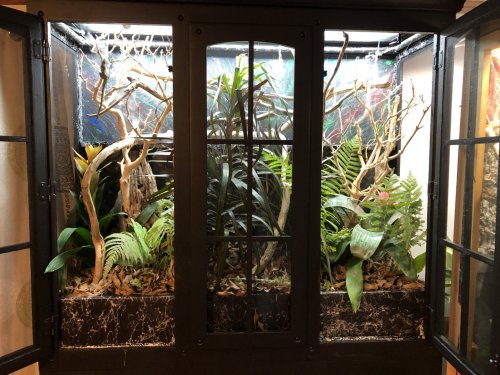
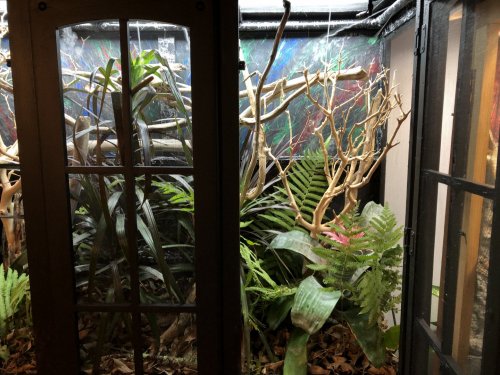
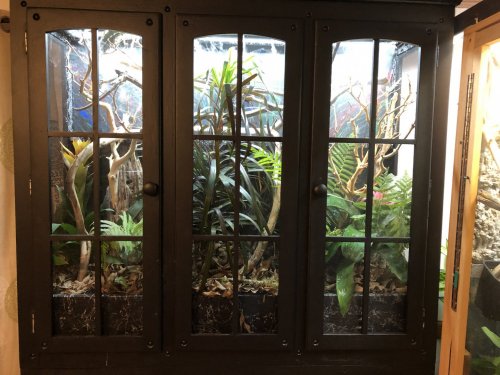
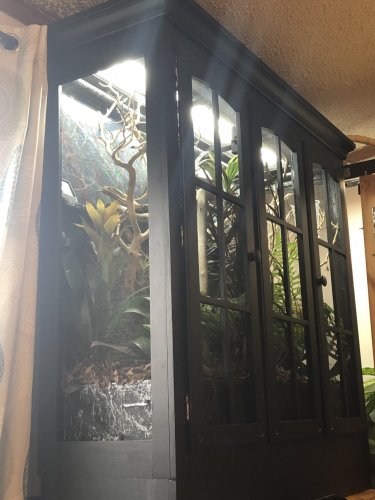
I prefer FlexSeal but it is expensive. Dryloc is cheaper and will get the job done. Both in HD Paint department. Whichever one you decide to use keep in mind that both of them work via chemical reactions and therefore produce fumes, this is called off-gassing. It’s agood practice to allow everything to air out for at least 3-4 days before adding your Cham. 1 week would be preferable.
My most recent build with FlexSeal:
https://www.chameleonforums.com/threads/bioactive-mentor.167174/
As long as it isn’t pressure treated your good to go. I recommend the select pine 1x2s. They are always straight, strong, and come pre-sanded for a decent price.
I prefer FlexSeal but it is expensive. Dryloc is cheaper and will get the job done. Both in HD Paint department. Whichever one you decide to use keep in mind that both of them work via chemical reactions and therefore produce fumes, this is called off-gassing. It’s agood practice to allow everything to air out for at least 3-4 days before adding your Cham. 1 week would be preferable.
My most recent build with FlexSeal:
https://www.chameleonforums.com/threads/bioactive-mentor.167174/
Attachments
Brodybreaux25
Chameleon Enthusiast
Kaizen
Chameleon Enthusiast
Brodybreaux,Agree with both above^
As long as it isn’t pressure treated your good to go. I recommend the select pine 1x2s. They are always straight, strong, and come pre-sanded for a decent price.
I prefer FlexSeal but it is expensive. Dryloc is cheaper and will get the job done. Both in HD Paint department. Whichever one you decide to use keep in mind that both of them work via chemical reactions and therefore produce fumes, this is called off-gassing. It’s agood practice to allow everything to air out for at least 3-4 days before adding your Cham. 1 week would be preferable.
My most recent build with FlexSeal:
https://www.chameleonforums.com/threads/bioactive-mentor.167174/
You’re a stud! Opinionated, vociferous, never one to pull punches, but always putting the chams first: props!

Darthroastcoffee
Avid Member
Cedar is a natural bug repellent for the oils in it. also I would say do some research into butcher block sealer or natural beeswax oil something along them lines.
Darthroastcoffee
Avid Member
Pine would be fine I built mine out of pine scraps off a job heres a link if it helps give an idea
https://www.chameleonforums.com/threads/cage-building.164003/
https://www.chameleonforums.com/threads/cage-building.164003/
Brodybreaux25
Chameleon Enthusiast
Made a mistake on the wood... you want the kiln dried whitewood. Still pine but it’s more of a refined product for the same price.

Similar threads

- Replies
- 3
- Views
- 752


- Replies
- 2
- Views
- 464


