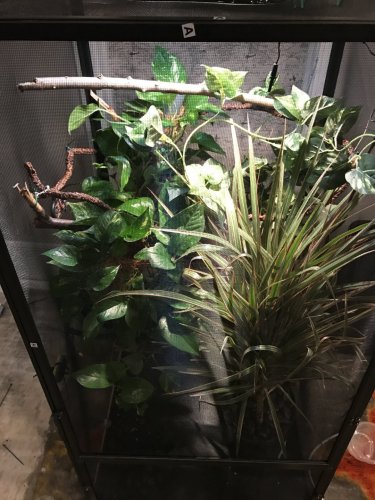
How often and how long and also I have read it is bad to mist my Cham while misting the cage is this true?
Your question has no definitive answer. It depends on many, many factors that are all interconnected: species, ambient humidity, cage (screen versus solid sides), furnishings (living plants versus non-living), ambient temp/humidity of the room and temp inside the cage, lighting (basking bulbs or not), and on an on and on.
For example, a panther will require a different overall humidity level than a quadricornis and a different approach to humidity levels. A quadricornis in my chameleon room requires a different misting schedule/amount than a quad housed 10 feet away in the main part of my house.
Everything "depends" and there are no pat answers. Care sheets mean little if you don't have a grasp of the natural history of the species so you can understand the "why" behind suggestions. How can you provide for an animal if you don't understand the climate, etc., where they developed? Bear in mind, also, that climate has changed dramatically in the past 20,000 years. The western escapement of the Arabian Peninsula where Veiled chameleons originate is a dry, harsh albeit often humid area. The Arabian Peninsula was lush 20,000 years ago, nothing like it is today. Chameleons would be better served if more people approached chameleon keeping as a puzzle that needed to be solved rather than relying on a "one size fits all" answer.
Figuring out a species is an education that is both interesting and frustrating.
To answer your question, in general, most people keep their chameleons far too dry and basically in desert habitats. Any time I see a cage with no drainage pan on top of a wood table or carpet, I KNOW that animal cannot be getting enough humidity and water.