minimum size colony for dubia

nightanole

Chameleon Enthusiast
So i got way too many dubia and will be selling them off next month when night time temps are above freezing.

My question is what is the minimum i need to keep? I only go through 3-4 males a week. Yes he is picky and will only eat the winged males, from tongs...

I cant get him to cup feed nypths without mixing them with crickets, and even then hes very good and getting only the crickets, with maybe eating 25% dubia in the meal.
 
I'd try to maintain at least 30 to 40 adults, with a total colony size of 100 (actually, probably closer to 160) or more counting the nymphs being raised up. You'll want a good number of breeding adults to ensure that their reproductive cycles overlap and you always have nymphs on hand to raise up. While he only goes through a few a week, it does still take several months for males to get up to adult size, and on top of that there is no guarantee that all of the nymphs being raised will be males. To offset this, you'll want to have enough roaches for roughly 40 to molt out as adults per month - if you get exactly a 50/50 split, that leaves you with 20 adult males per month to feed off, which should be plenty and leave you with extra in case you have an off month with fewer maturing adults.

Hope that helps!

-Jen
 
You can also specifically only sell females, or mostly females. You can determine the genders of the nymphs once they are medium/large size (depending on how good your eyes are.) The bigger they are, the more accurate the sexing will be. Plus, you can sell the female nymphs for a little more than it would be if they were just mixed sexes, AND you can keep the male nymphs for your guy. Two different methods that I use are below with pictures to help. If you use them both on the same nymph, it's pretty darn accurate.

Method 1:
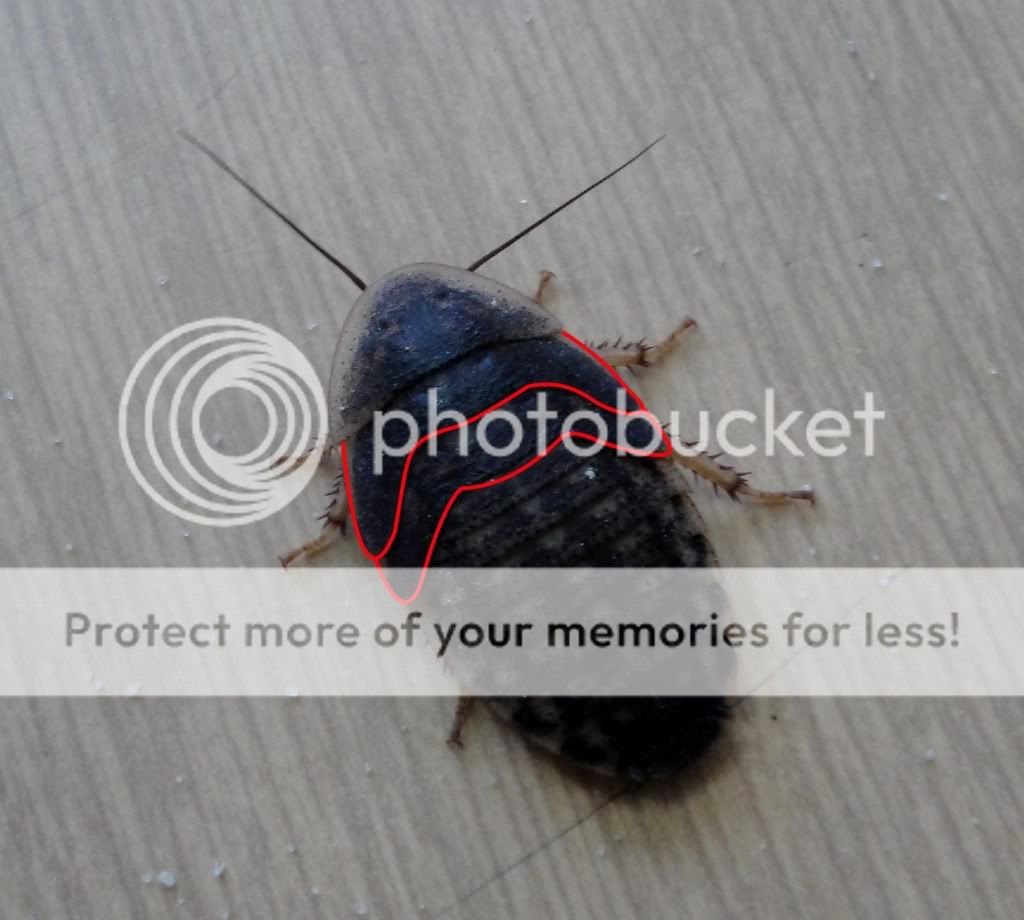
Males have larger "wing buds" than females do. I have a crude drawing with the female in red and the male in blue, then photos of real nymphs with the differences highlighted.

blattalateraliswingstubs.jpg


Female-
femaledubianymphwingbuds-1.jpg


Male-
Maledubianymph-wingstubs.jpg


Method 2:
On the belly of the nymphs, when you look at the "butt" area, you will see a difference in the last segment. The males have a much smaller last segment than the females do.

Here is a photo highlighting this difference:
malefemaledubiabutts.jpg
 
Back
Top Bottom