OK guys so this is my third veiled camillion the first one had a great life but a friend of mine was keeping it while I was on vacation and sadly killed her the second chameleon just passed last week she was having a severe eye issue The vet said she had never seen before she did not think my cham would get better my chameleons body began to shutdown 2 days ago and she passed 6 hours later I went and got a baby veiled around 2 months from petsmart yes I know it's a horrible thing to buy from pet stores but this Chameleon was being kept in a hermit crab cage with no water no Mister No anything so I felt bad for the little fella and brought him home please do not get on here and tell me what a horrible person I am for buying from a pet store I already know what's behind it anyway Now i'm just really scared and paranoid thinking that my baby camillion is going to die for some reason just need someone to assure me that everything i'm doing is what i need to be Doing she's 2 to 3 months old not even sure if she is a she but it's too early to see if there is a tarsle spur she's in a tall reptaboo Cage her humidity has been around 30 to 50 during the day time and 72 a 100 at night time she does not use a night light however I keep a space heater in the room she's in at night because I live in New Hampshire and it gets very cold she has AT5 light And a watering system that filtrates her water I spray her cage around five to ten times a day and her temperature stays between seventy two and seventy eight during the day

Navigation
Install the app
How to install the app on iOS
Follow along with the video below to see how to install our site as a web app on your home screen.
Note: This feature may not be available in some browsers.
More options
You are using an out of date browser. It may not display this or other websites correctly.
You should upgrade or use an alternative browser.
You should upgrade or use an alternative browser.
Might b paranoid
- Thread starter Onnie.g
- Start date
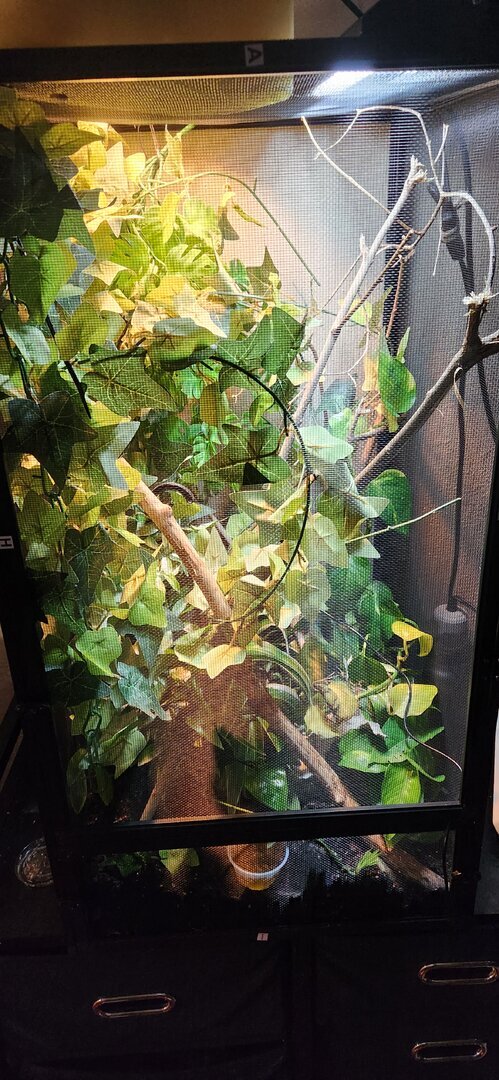
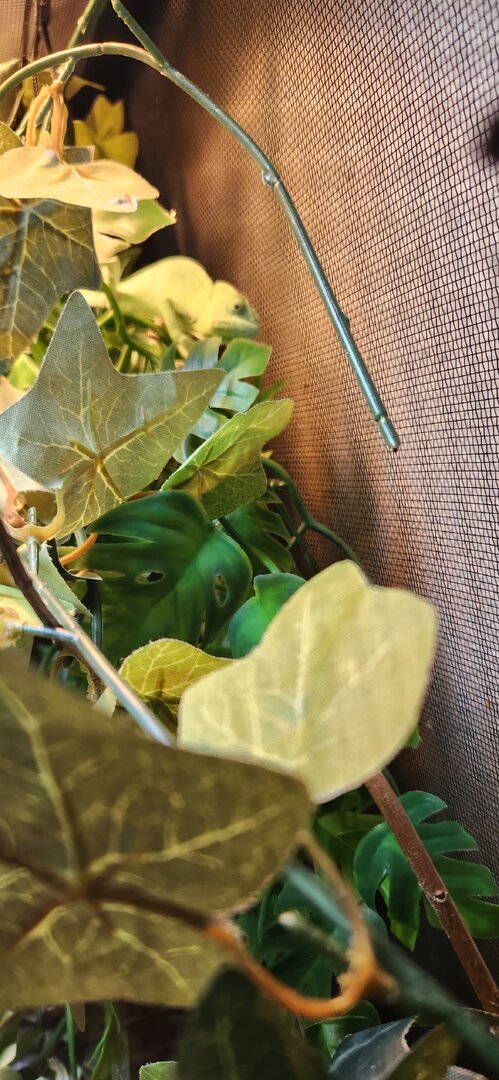
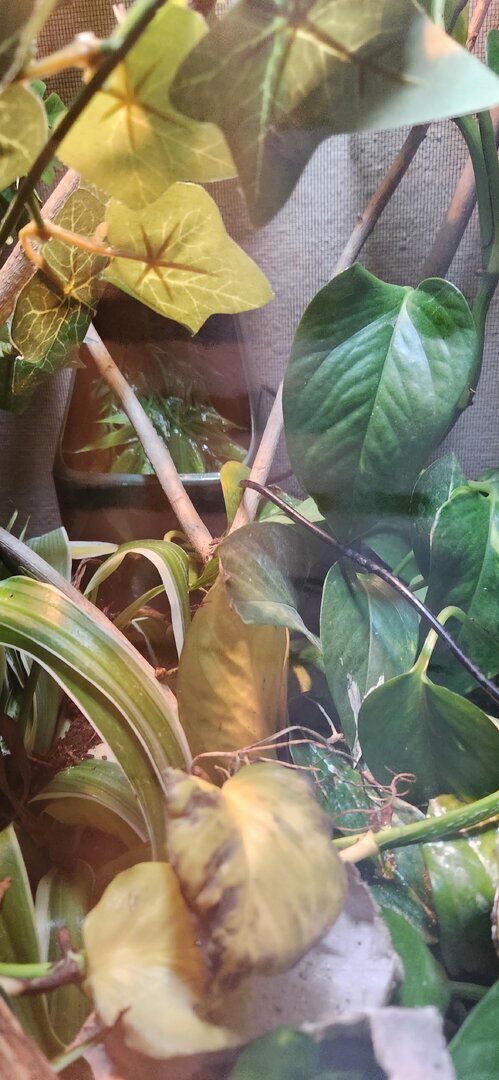
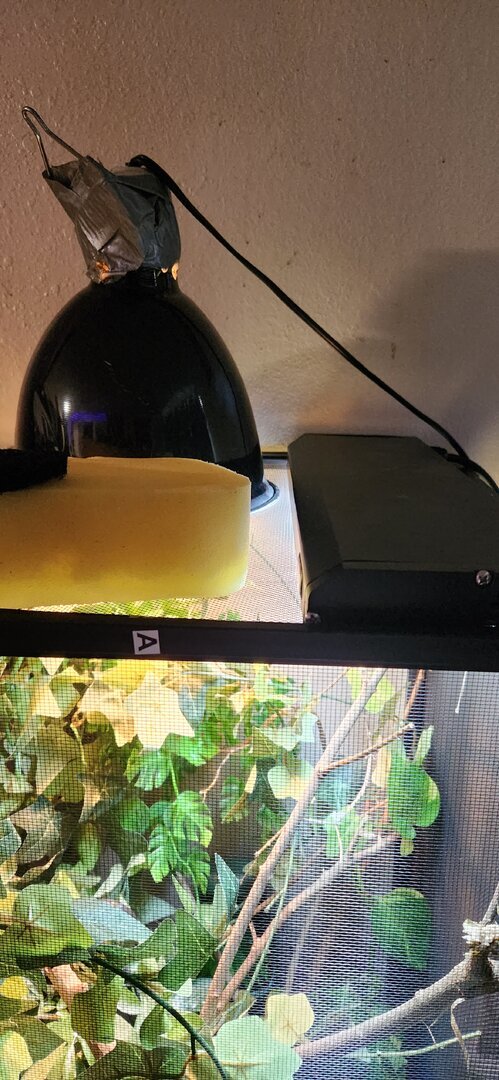


Baby would be old enough to tell gender. What are you concerned about exactly?
If you want to do a husbandry review I can post the form for you. This is the easiest way to go over everything.
Right off I can tell you that you want to pull out the fountain. THey are bacteria breeding grounds and not recommended because of this. Also all the fake plants should be removed and live plants that are veiled tested should be added.

If you want to do a husbandry review I can post the form for you. This is the easiest way to go over everything.
Right off I can tell you that you want to pull out the fountain. THey are bacteria breeding grounds and not recommended because of this. Also all the fake plants should be removed and live plants that are veiled tested should be added.
And I guess my question is do I have everything set up properly for this cham to thrive....I've had 2 pass one natural and one bc of someone not taking care of her...I'm just paranoid that this one will pass to so I guess I'm just looking for sum expert handler to tell me this set up is "Great" and my cham will be healthy......making sure everything is what it's supposed to be I guess...you said she's old enough to tell her age...everything I read said its hard to sex b4 4 months of age she's about 2 to 3 months so how do u suggest seeing this young
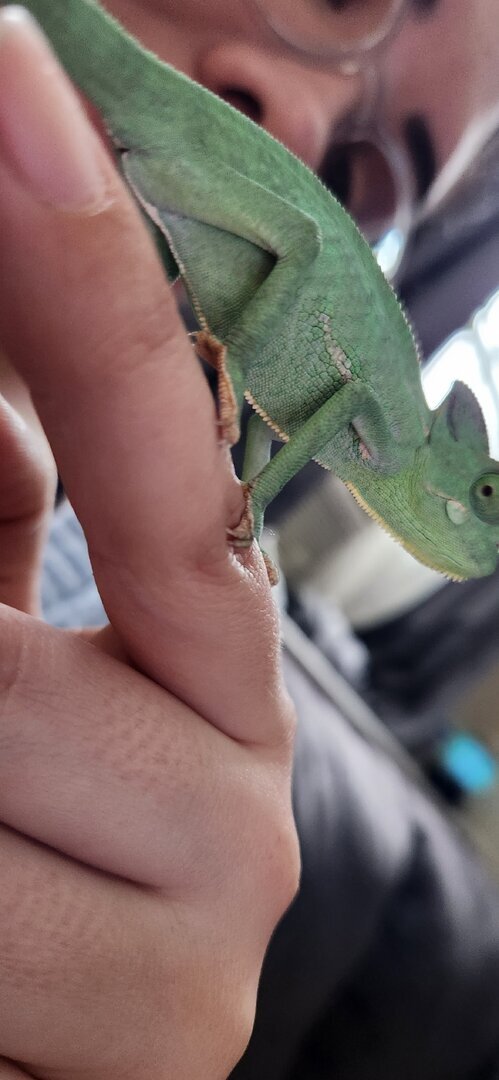
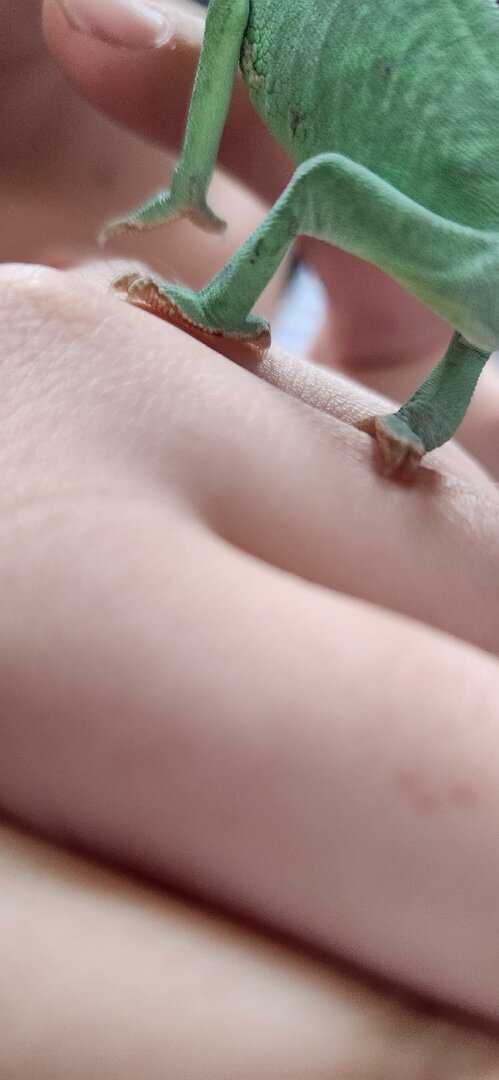
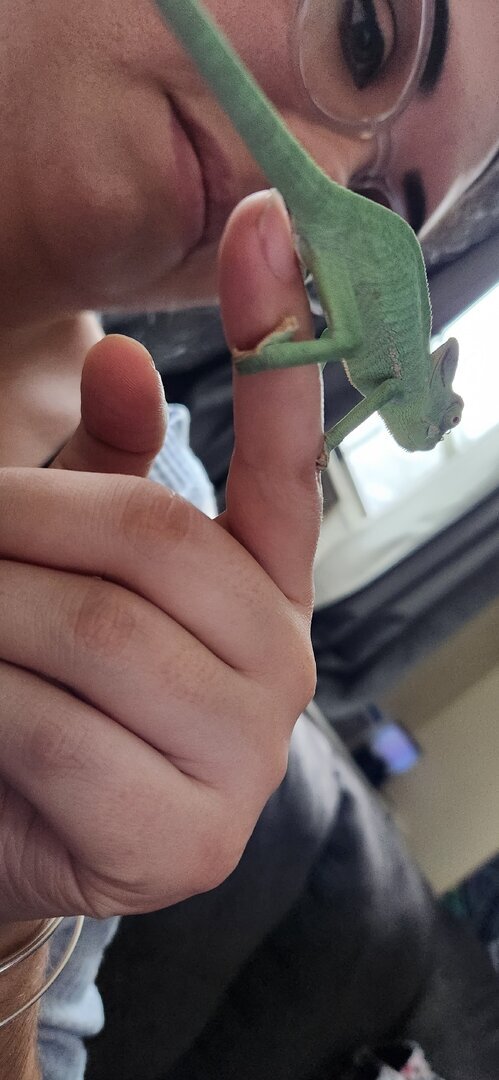
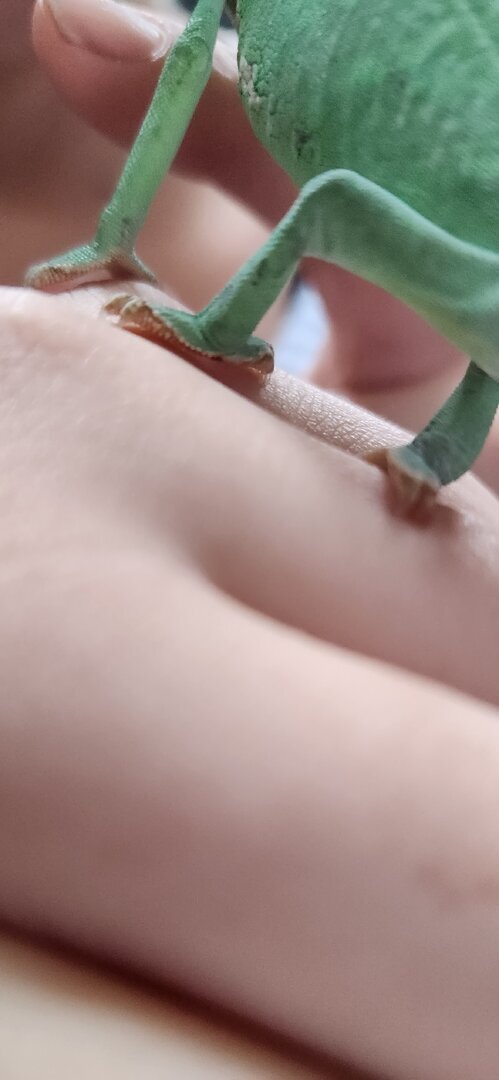
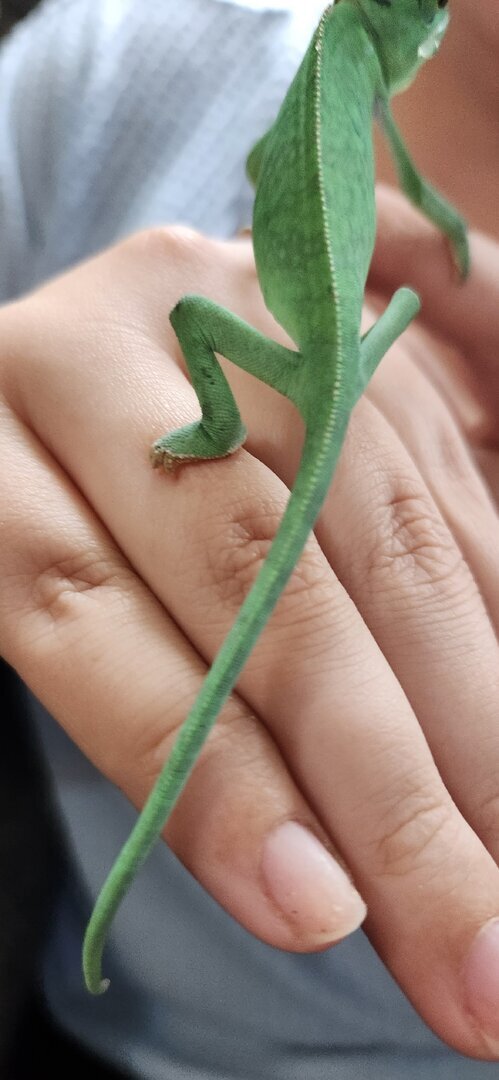
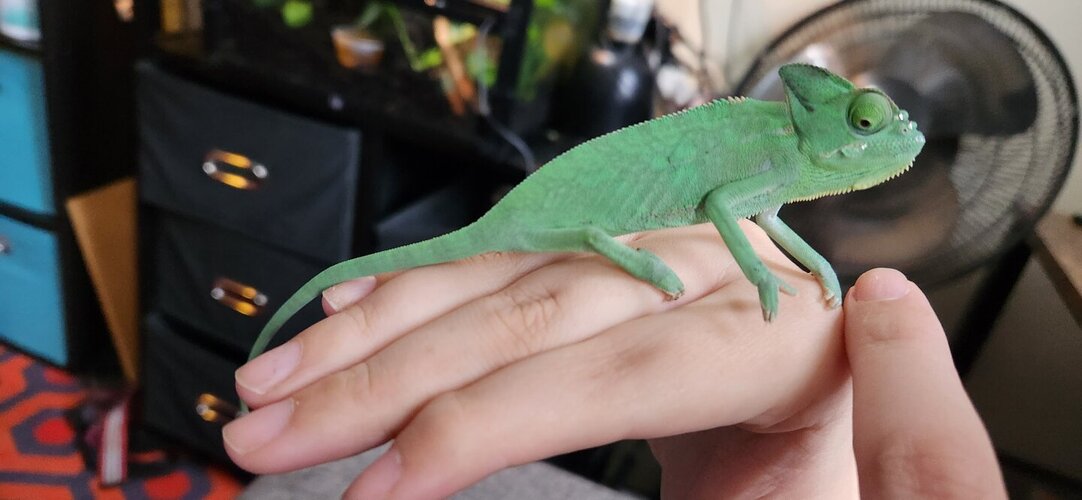
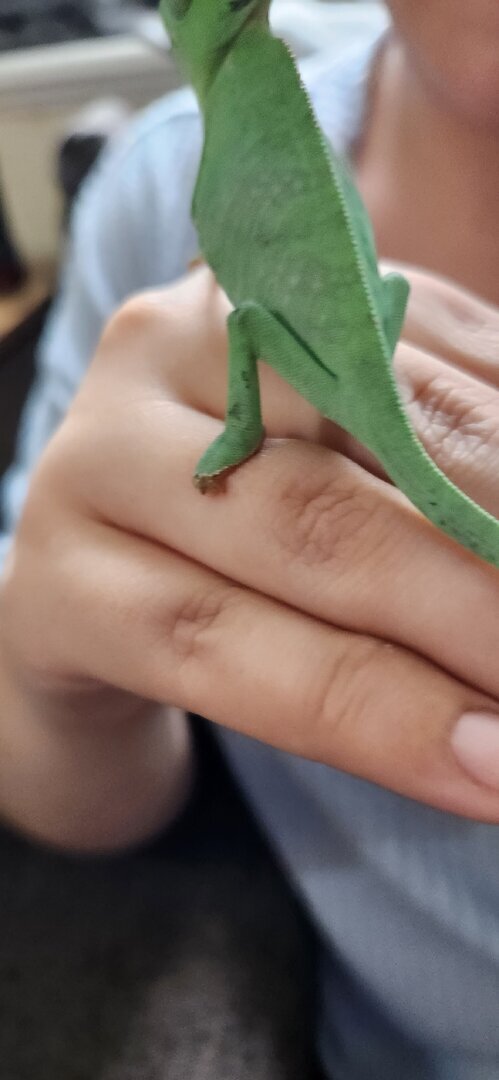
So if you copy and paste the form below into your reply and then fill it out with as much detail as possible we can give you more in depth feedback. Without these details I can not say if everything is fine or not. Too many variables from temps to uvb type to supplements used need to be defined as all of these can impact health. If you can get pics of the back of the back feet taken from the side view we can determine gender.
Chameleon Info:
Cage Info:
Current Problem - The current problem you are concerned about.
--------------
Please Note:
Chameleon Info:
- Your Chameleon - The species, sex, and age of your chameleon. How long has it been in your care?
- Handling - How often do you handle your chameleon?
- Feeding - What are you feeding your cham? What amount? What is the schedule? How are you gut-loading your feeders?
- Supplements - What brand and type of calcium and vitamin products are you dusting your feeders with and what is the schedule?
- Watering - What kind of watering technique do you use? How often and how long to you mist? Do you see your chameleon drinking?
- Fecal Description - Briefly note colors and consistency from recent droppings. Has this chameleon ever been tested for parasites?
- History - Any previous information about your cham that might be useful to others when trying to help you.
Cage Info:
- Cage Type - Describe your cage (Glass, Screen, Combo?) What are the dimensions?
- Lighting - What brand, model, and types of lighting are you using? What is your daily lighting schedule?
- Temperature - What temp range have you created (cage floor to basking spot)? Lowest overnight temp? How do you measure these temps?
- Humidity - What are your humidity levels? How are you creating and maintaining these levels? What do you use to measure humidity?
- Plants - Are you using live plants? If so, what kind?
- Placement - Where is your cage located? Is it near any fans, air vents, or high traffic areas? At what height is the top of the cage relative to your room floor?
- Location - Where are you geographically located?
Current Problem - The current problem you are concerned about.
--------------
Please Note:
- The more details you provide the better and more accurate help you will receive.
- Photos can be very helpful.


2-3 month old veiled not sure of sex will post pics of feet I can't tell if there is a spur or not. II do not handle littlefoot unless applying shed ad which I havent experienced yet with this new lil fella. He gets small crickets right now that are dusted with repticalcium without d3 everyday and the same brand with d3 once a month.crickets are gut loaded with fresh veggies daily. The only supplements I use are named above. I spray littlefoots cage 5-10x daily and there is a water filtration system in the bottom of the cage. His poops I think are normal I posted a thread yesterday with sum pics I'll add here but the poo is brown and solid the urates seemed to be all white but not completely solid so idk if that a problem.littlefoot is a new addition to our family so have only seen 1 poop, cage does have lots of coverage on the bottom so I could just not be seeing them. Not sure of his history I bought him from a petsmart.....YES I KNOW THAT HORRIBLE, BUT IN MY DEFENSE HE WAS BEING KEPT IN A HERMIT CRAB TANK WITH NO WATER OR LIGHT...so that being said I have no clue about him I do have the top rated rep vet in New England tho n littlefoot will be having a yearly check up soon along with fecal test for parasites. Wire cage 24x14x14 5 types of real plants in the bottom growing up middle with organic soil.
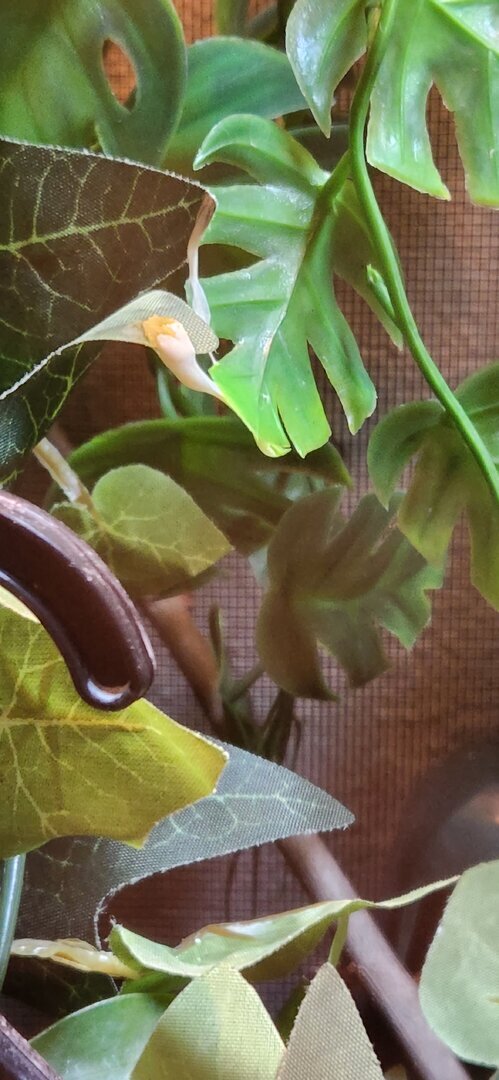
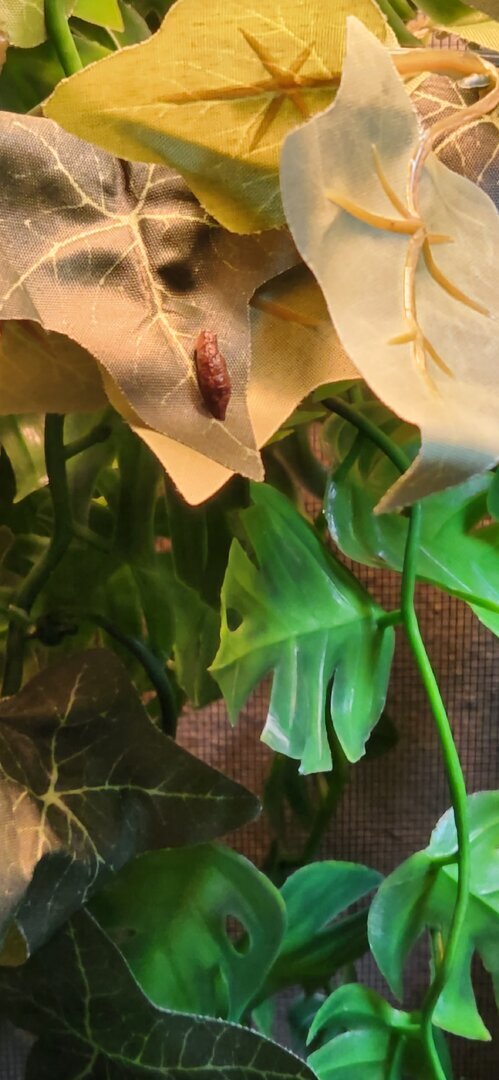
Two types of fake plants one being a vine cluster in a top corner and the other is a leaf cluster in the other top corner for coverage he also has multiple sticks for climbing I use organic soil in the bottom of the cage
T five fourteen inch long Bulb on the top and seventy five Watt intense bulb Humidity stays around forty to fifty during the day and seventy to one hundred at night the temperature stays around seventy three to seventy eight during the day and sixty to seventy at night The cage is located close to a window but far enough away that the air coming in is not bothering him he's near my t v in the farthest away from people in my living room I live in new hampshire so it gets cold here it's snowing right now
Two types of fake plants one being a vine cluster in a top corner and the other is a leaf cluster in the other top corner for coverage he also has multiple sticks for climbing I use organic soil in the bottom of the cage
T five fourteen inch long Bulb on the top and seventy five Watt intense bulb Humidity stays around forty to fifty during the day and seventy to one hundred at night the temperature stays around seventy three to seventy eight during the day and sixty to seventy at night The cage is located close to a window but far enough away that the air coming in is not bothering him he's near my t v in the farthest away from people in my living room I live in new hampshire so it gets cold here it's snowing right now
Attachments
-
 20221116_105459.jpg72.8 KB · Views: 159
 -
 20221116_105436.jpg60 KB · Views: 170
 -
 20221116_105450.jpg79.9 KB · Views: 160
 -
 20221116_105434.jpg50.5 KB · Views: 163
 -
 20221116_105419.jpg73.3 KB · Views: 152
 -
 20221116_105414.jpg115.1 KB · Views: 174
 -
 20221116_105352.jpg54.6 KB · Views: 179
 -
 20221115_111323.jpg106.5 KB · Views: 156
 -
 20221115_105342.jpg93.3 KB · Views: 162
Give me a few to go through everything.2-3 month old veiled not sure of sex will post pics of feet I can't tell if there is a spur or not. II do not handle littlefoot unless applying shed ad which I havent experienced yet with this new lil fella. He gets small crickets right now that are dusted with repticalcium without d3 everyday and the same brand with d3 once a month.crickets are gut loaded with fresh veggies daily. The only supplements I use are named above. I spray littlefoots cage 5-10x daily and there is a water filtration system in the bottom of the cage. His poops I think are normal I posted a thread yesterday with sum pics I'll add here but the poo is brown and solid the urates seemed to be all white but not completely solid so idk if that a problem.littlefoot is a new addition to our family so have only seen 1 poop, cage does have lots of coverage on the bottom so I could just not be seeing them. Not sure of his history I bought him from a petsmart.....YES I KNOW THAT HORRIBLE, BUT IN MY DEFENSE HE WAS BEING KEPT IN A HERMIT CRAB TANK WITH NO WATER OR LIGHT...so that being said I have no clue about him I do have the top rated rep vet in New England tho n littlefoot will be having a yearly check up soon along with fecal test for parasites. Wire cage 24x14x14 5 types of real plants in the bottom growing up middle with organic soil.
Two types of fake plants one being a vine cluster in a top corner and the other is a leaf cluster in the other top corner for coverage he also has multiple sticks for climbing I use organic soil in the bottom of the cage
T five fourteen inch long Bulb on the top and seventy five Watt intense bulb Humidity stays around forty to fifty during the day and seventy to one hundred at night the temperature stays around seventy three to seventy eight during the day and sixty to seventy at night The cage is located close to a window but far enough away that the air coming in is not bothering him he's near my t v in the farthest away from people in my living room I live in new hampshire so it gets cold here it's snowing right now
See my feedback in Bold. This is going to be a lot of info. let me know what questions you have.
2-3 month old veiled not sure of sex will post pics of feet I can't tell if there is a spur or not. You have a female... So husbandry will need to be on point for her since she will lay infertile eggs.
II do not handle littlefoot unless applying shed ad which I havent experienced yet with this new lil fella. No shed aid at all. They are dry shedders. So applying anything to the skin will actually act more like paper mache sticking the shed to the skin.
He gets small crickets right now. At this age she should be getting 1/4 inch crickets and easily 2 dozen a day. I recommend getting a feeder run so that they are contained and you can track how much she is eating. Crickets loose in a cage will bite sleeping chams. Full throttle feeders and shooting gallery feeders are both good options.
that are dusted with repticalcium without d3 everyday and the same brand with d3 once a month.crickets are gut loaded with fresh veggies daily. The only supplements I use are named above. You will need a multivitamin. Can you post pics of the supplement labels so I know exactly which ones your using? Then I can give exact feedback. Supplements should be calcium without D3 every feeding then 2 times a month a multivitamin with D3 given on the 1st and the 15th. This is the easiest supplement schedule to follow. See image below for gutload and feeder options.
I spray littlefoots cage 5-10x daily and there is a water filtration system in the bottom of the cage. This is a bit overkill for her. The cage should dry out in the day. Spraying in the morning and late afternoon a 2-3min misting. Remove the water system in the bottom these are not recommended for chams. They breed bacteria which is extremely unhealthy for them to drink from. you can add a dripper by simply putting some ice cubes on the screen top to provide a slow drip mid day for access to water.
His poops I think are normal I posted a thread yesterday with sum pics I'll add here but the poo is brown and solid the urates seemed to be all white but not completely solid so idk if that a problem.littlefoot is a new addition to our family so have only seen 1 poop, cage does have lots of coverage on the bottom so I could just not be seeing them. Yes, I commented already on this in your other thread.
Not sure of his history I bought him from a petsmart.....YES I KNOW THAT HORRIBLE, BUT IN MY DEFENSE HE WAS BEING KEPT IN A HERMIT CRAB TANK WITH NO WATER OR LIGHT...so that being said I have no clue about him I do have the top rated rep vet in New England tho n littlefoot will be having a yearly check up soon along with fecal test for parasites. It is not that big box stores are horrible. Depending on what they were exposed to there may make it harder for a keeper. It is all about the husbandry they receive once they come home.
Wire cage 24x14x14 5 types of real plants in the bottom growing up middle with organic soil. So this is too small of a cage. You need a 24x24x48inch cage. You will have to be able to accommodate a permanent lay bin in the bottom. The organic soil needs to be removed from the bottom of the cage. It would have to be fully bioactive if your going to have a soil bottom. Without the drainage and isopods that a bioactive layer has this is going to become a sloppy bottom holding moldy dirt. Becomes dangerous for chameleons to be in that. Also she has fully access to eating the soil which is a high impaction risk. I recommend fully bare bottom cage. If you want info on bio active let me know.
Two types of fake plants one being a vine cluster in a top corner and the other is a leaf cluster in the other top corner for coverage he also has multiple sticks for climbing I use organic soil in the bottom of the cage Fake plants are not recommended at all with veileds. They will start trying to eat them as they get older causing impaction risk. Females will tend to eat plants far more than a male so these should be removed. You want tall plants that fill out the cage. Veiled tested see image below.
T five fourteen inch long Bulb on the top and seventy five Watt intense bulb I would reduce to a 60 watt regular incandescent bulb for heat. The focused heat bulbs can create too hot of a spot and cause thermal burns. The T5 is correct if it has a 5.0 uvb bulb. This needs a branch 8-9 inches below it for the correct UVB exposure. You will need to get the 24inch T5 to go with the larger cage size you need to upgrade to.
Humidity stays around forty to fifty during the day and seventy to one hundred at night. How are you getting such high humidity at night?
the temperature stays around seventy three to seventy eight during the day and sixty to seventy at night How are you measuring your temps? You will need a temp gauge with a probe tied in below the basking fixture on the branch. She should be kept no hotter than 78-80. This is extremely important for females and controlling egg production.
The cage is located close to a window but far enough away that the air coming in is not bothering him he's near my t v in the farthest away from people in my living room I live in new hampshire so it gets cold here it's snowing right now So I would not have her near any window. This is going to put her close to very cold air from the window. This can create health issues in winter and in summer. Cold in winter and direct sun in summer then heats up a cage too much. Controlling ambient temp for them is important.
Start reading through all the modules in this husbandry program. It will teach you exactly how everything has to be set up for them to thrive. https://chameleonacademy.com/chameleon-husbandry-program-getting-started-with-chameleons/
Additional female care to control clutch size lowering risk of egg binding.
As she matures you will have to start cutting back her food. By about 6-7 months she should be getting about 5-8 small feeders each day. At about 7-8 months you want to slowly reduce by cutting down feeder amounts so that she is on a feeding schedule of 3 days a week with 3 feeders. You want them to be on this schedule by the time they are 9-10 months old.
You will not ever want basking to be over 78-80 for her. Very important for females because as she ages she needs this temp no higher at basking to help control the amount of eggs she produces.
A lay bin should be added as a permanent fixture by the time they are 6 months old so they get used to it and it does not cause stress.
https://www.chameleonforums.com/threads/laying-bin-set-up-educational-video.77225/


2-3 month old veiled not sure of sex will post pics of feet I can't tell if there is a spur or not. You have a female... So husbandry will need to be on point for her since she will lay infertile eggs.
II do not handle littlefoot unless applying shed ad which I havent experienced yet with this new lil fella. No shed aid at all. They are dry shedders. So applying anything to the skin will actually act more like paper mache sticking the shed to the skin.
He gets small crickets right now. At this age she should be getting 1/4 inch crickets and easily 2 dozen a day. I recommend getting a feeder run so that they are contained and you can track how much she is eating. Crickets loose in a cage will bite sleeping chams. Full throttle feeders and shooting gallery feeders are both good options.
that are dusted with repticalcium without d3 everyday and the same brand with d3 once a month.crickets are gut loaded with fresh veggies daily. The only supplements I use are named above. You will need a multivitamin. Can you post pics of the supplement labels so I know exactly which ones your using? Then I can give exact feedback. Supplements should be calcium without D3 every feeding then 2 times a month a multivitamin with D3 given on the 1st and the 15th. This is the easiest supplement schedule to follow. See image below for gutload and feeder options.
I spray littlefoots cage 5-10x daily and there is a water filtration system in the bottom of the cage. This is a bit overkill for her. The cage should dry out in the day. Spraying in the morning and late afternoon a 2-3min misting. Remove the water system in the bottom these are not recommended for chams. They breed bacteria which is extremely unhealthy for them to drink from. you can add a dripper by simply putting some ice cubes on the screen top to provide a slow drip mid day for access to water.
His poops I think are normal I posted a thread yesterday with sum pics I'll add here but the poo is brown and solid the urates seemed to be all white but not completely solid so idk if that a problem.littlefoot is a new addition to our family so have only seen 1 poop, cage does have lots of coverage on the bottom so I could just not be seeing them. Yes, I commented already on this in your other thread.
Not sure of his history I bought him from a petsmart.....YES I KNOW THAT HORRIBLE, BUT IN MY DEFENSE HE WAS BEING KEPT IN A HERMIT CRAB TANK WITH NO WATER OR LIGHT...so that being said I have no clue about him I do have the top rated rep vet in New England tho n littlefoot will be having a yearly check up soon along with fecal test for parasites. It is not that big box stores are horrible. Depending on what they were exposed to there may make it harder for a keeper. It is all about the husbandry they receive once they come home.
Wire cage 24x14x14 5 types of real plants in the bottom growing up middle with organic soil. So this is too small of a cage. You need a 24x24x48inch cage. You will have to be able to accommodate a permanent lay bin in the bottom. The organic soil needs to be removed from the bottom of the cage. It would have to be fully bioactive if your going to have a soil bottom. Without the drainage and isopods that a bioactive layer has this is going to become a sloppy bottom holding moldy dirt. Becomes dangerous for chameleons to be in that. Also she has fully access to eating the soil which is a high impaction risk. I recommend fully bare bottom cage. If you want info on bio active let me know.
Two types of fake plants one being a vine cluster in a top corner and the other is a leaf cluster in the other top corner for coverage he also has multiple sticks for climbing I use organic soil in the bottom of the cage Fake plants are not recommended at all with veileds. They will start trying to eat them as they get older causing impaction risk. Females will tend to eat plants far more than a male so these should be removed. You want tall plants that fill out the cage. Veiled tested see image below.
T five fourteen inch long Bulb on the top and seventy five Watt intense bulb I would reduce to a 60 watt regular incandescent bulb for heat. The focused heat bulbs can create too hot of a spot and cause thermal burns. The T5 is correct if it has a 5.0 uvb bulb. This needs a branch 8-9 inches below it for the correct UVB exposure. You will need to get the 24inch T5 to go with the larger cage size you need to upgrade to.
Humidity stays around forty to fifty during the day and seventy to one hundred at night. How are you getting such high humidity at night?
the temperature stays around seventy three to seventy eight during the day and sixty to seventy at night How are you measuring your temps? You will need a temp gauge with a probe tied in below the basking fixture on the branch. She should be kept no hotter than 78-80. This is extremely important for females and controlling egg production.
The cage is located close to a window but far enough away that the air coming in is not bothering him he's near my t v in the farthest away from people in my living room I live in new hampshire so it gets cold here it's snowing right now So I would not have her near any window. This is going to put her close to very cold air from the window. This can create health issues in winter and in summer. Cold in winter and direct sun in summer then heats up a cage too much. Controlling ambient temp for them is important.
Start reading through all the modules in this husbandry program. It will teach you exactly how everything has to be set up for them to thrive. https://chameleonacademy.com/chameleon-husbandry-program-getting-started-with-chameleons/
Additional female care to control clutch size lowering risk of egg binding.
As she matures you will have to start cutting back her food. By about 6-7 months she should be getting about 5-8 small feeders each day. At about 7-8 months you want to slowly reduce by cutting down feeder amounts so that she is on a feeding schedule of 3 days a week with 3 feeders. You want them to be on this schedule by the time they are 9-10 months old.
You will not ever want basking to be over 78-80 for her. Very important for females because as she ages she needs this temp no higher at basking to help control the amount of eggs she produces.
A lay bin should be added as a permanent fixture by the time they are 6 months old so they get used to it and it does not cause stress.
https://www.chameleonforums.com/threads/laying-bin-set-up-educational-video.77225/
Awesome thanks south that's super helpful....I was having alot of issues with keeping humidity up at night so Someone suggested putting either a shower curtain or a wet towel around her cage at night to increase the humidity so i've been taking a Damp towel and draping it around the top and one side of the cage at night and it's been keeping her humidity up
I have a reptizoo Humidifier anthermotor i have this thermometer and humidifier on the front of the cage so it's not directly under her lighting i normally tell you guys about two degrees higher than the temp says because i know it's going to be hotter under the light
I have a reptizoo Humidifier anthermotor i have this thermometer and humidifier on the front of the cage so it's not directly under her lighting i normally tell you guys about two degrees higher than the temp says because i know it's going to be hotter under the light
So we have to be careful with moisture. You only want high humidity with air flow and cool temps. It is better to add all live plants and then if you need to put a shower curtain or duct window film to the back and a side wall to see where your levels are.Awesome thanks south that's super helpful....I was having alot of issues with keeping humidity up at night so Someone suggested putting either a shower curtain or a wet towel around her cage at night to increase the humidity so i've been taking a Damp towel and draping it around the top and one side of the cage at night and it's been keeping her humidity up
I have a reptizoo Humidifier anthermotor i have this thermometer and humidifier on the front of the cage so it's not directly under her lighting i normally tell you guys about two degrees higher than the temp says because i know it's going to be hotter under the light
The only way to accurately measure temps for basking will be with a gauge that has a probe. This is really important to know exacts under the heat fixture.
No something like these...So like one of the old school thermometer

Similar threads
- Replies
- 10
- Views
- 1K


- Replies
- 2
- Views
- 414


