Here's some information to explain supplementing for you...
Appropriate temperatures aid in digestion so it's important to provide proper temperatures so the nutrients you are providing can be absorbed.
Providing UVB light will allow the chameleon to produce the D3 it needs to be able to use the calcium in its diet. It should be able to move in and out of the UVB and there should be no glass or plastic between the light and the chameleon to block the UVB. The chameleon should not get an overdose of D3 from this exposure but D3 from supplements can lead to an online erdose if overdone. Providing D3 through phos-free calcium/D3 supplements twice a month ensures that the chameleon gets some D3 without overdosing it.
Gutloading the insects provides insects that are healthy and full of nutrients that the chameleon needs. You can give them a wide assortment of greens (collards, dandelion greens, kale, endive, escarole, mustard greens, etc.)...as well as veggies (carrots, sweet potato, sweet red pepper, squash, zucchini, etc.).
Dusting with a vitamin powder twice a month that contains a beta carotene source of vitamin A. Will ensure that your chameleon gets some vitamins without overdoing it or risking an overdose of preformed vitamin A.
Since most of the insects we feed them have a poor ratio of calcium to phos its important to dust he insects with a phos - free calcium powder just before feeding the insects to the chameleon to make up for it.
Your dusting also depends on what supplements you use. You need to create a balance...especially between calcium, phos, D3 and vitamin A...so you need to look at how much of eachiw in your supplements.


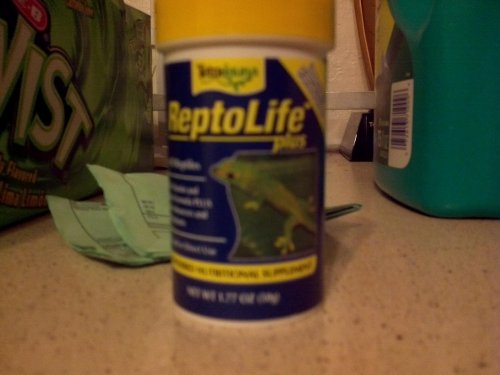
 Okay so I picked up a supplement but not very sure if I need it....... its by tetrafauna and its Reptolife plus it also says for all reptiles, multi vitamin and minerals formula...... can I use it and if yes how often can I. I have a 4-6 month old male veild chameleon............thank you¡¡¡