Yeah- I'm only talking veileds and panthers on those temps- sorry, I may have made an assumption about the species. Likewise- comments about diapause don't even apply for species like melleri, montiums, quads, etc. I don't know why but I was assumming we were talking about panthers or maybe veileds here.
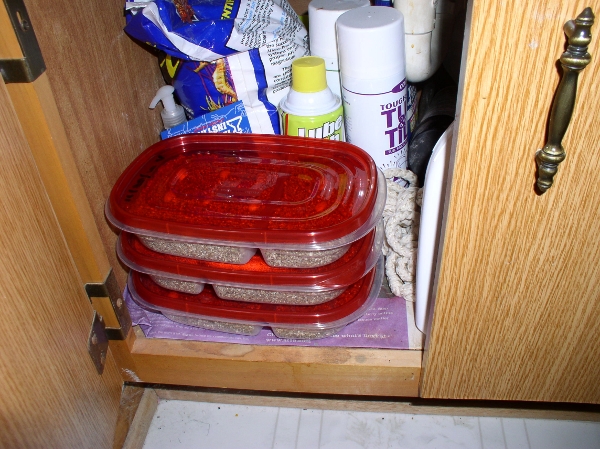
Here is a photo of my egg setup when I sometimes have used the cabinet under my bathroom sink as the "incubator".
Really simple stuff, but a few things of interest here-
I don't like these containers particularly because they are "lunch" containers with divided bottoms under a single lid. I prefer a bit larger containers. These "tricked" me when I bought them because the division was under a cardboard wrapper, but I used them successfully anyway. Not a huge deal, but I usually prefer a little more room for substrate and air.
Your icebox should be fine. It just provides insulation so temperature swings will be slower which is fine. May even protect from extreme daily swings in temperature some. It will provide darkness, which is a good thing too.
I generally use good brands (rubbermaid) of air-tight food storage containers, as it greatly simplifies incubation. I put equal weights of water and substrate (perlite or vermiculite- I prefer perlite for viewing the eggs as they develop as it allows very subtle changes in the appearance of the egg shell to be accurately viewed compared to vermiculite). Once the eggs are set in the substrate, the containers are sealed and only opened during incubation if I want to take a better look at something or if an egg happens to go bad and I want to remove it. Otherwise, there is no need, and this keeps the substrate moisture stable so I don't have to monkey around with adding more water during the months of incubation.


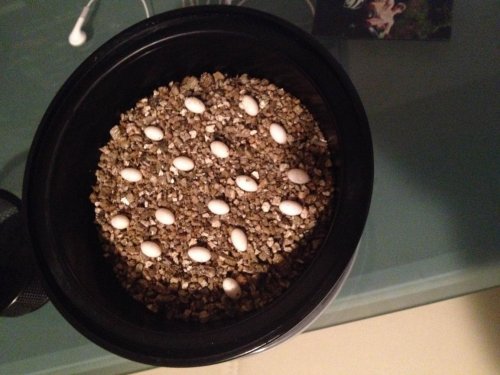
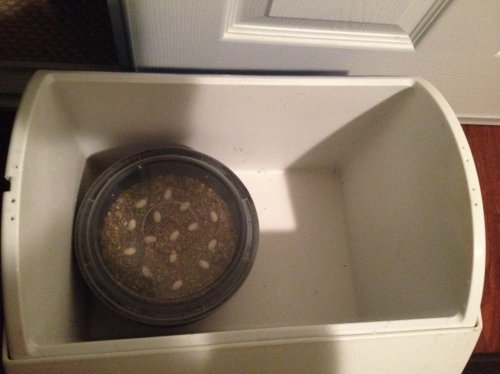




 Lastly, if some of the eggs are touching is that okay or should I separate them a bit more? I'd prefer not to touch them to be honest.


