Husbandry is very important if you want to have a healthy chameleon...lighting, feeding, supplementing, taking good care of the insects, providing proper temperatures.
It's important to have a UVB light so that the chameleon can produce D3 and thus use the calcium in its system. A basking light will provide a place for the chameleon to warm up so that it can digest its food properly thus absorb the nutrients it needs from its diet.
Sine many of the feeder insects have a poor ratio of calcium to phosphorous its recommended that the insects be dusted before they are fed to the chameleon with a phosphorous - free calcium powder. It is also recommended that you dust twice a month with a phosphorous - free calcium /D3 powder to ensure that the chameleon gets some D3 without overdosing it. D3 from supplements can build up in the system and lead to overdoses but D3 produced from exposure to UVB won't as long as the chameleon can move in and out of the UVB. It's also recommended that the insects be dusted twice a month with a vitamin powder that contains a beta carotene (prOformed) source of vitamin A. PrOformed sources of vitamin A cannot build up in the system like prEformed sources can. If your chameleon shows signs of a lack of vitamin A you can then give it some or give it once in a while as a precaution.
Calcium, vitamin A, phosphorous and vitamin D3 are all important for bone health and other things in the system and need to be in balance. You need to look at what you feed the chameleon with, what you feed the insects and the supplements when trying to balance these things.
Crickets, superworms, roaches, locusts canned fed a wide range of greens such as collards, escarole, endive, dandelion greens, etc. And veggies such as carrots, sweet red pepper, squash, zucchini, etc.
Hope this helps.

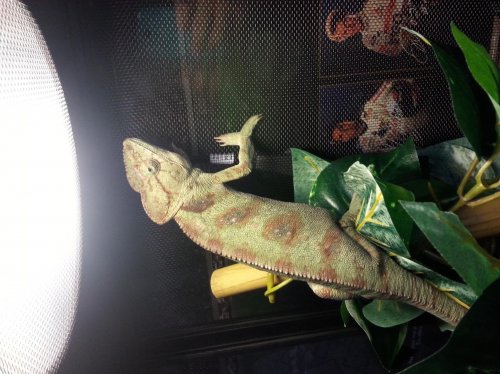
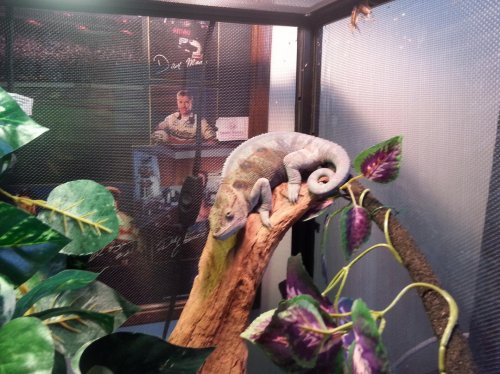
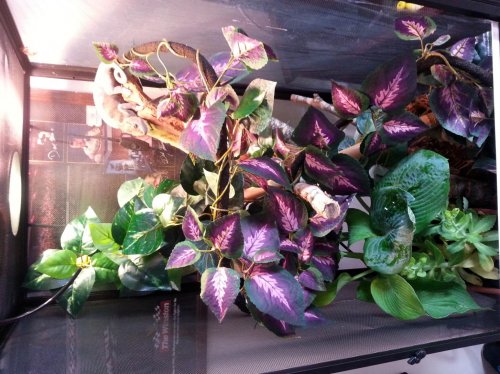


 also in my opinion i would rase her basking light of the metal top so if she trys to climb on it she doesnt burn her foot or feet


