I thought that Eddie was young and asked that he draw my replies to your attention...not sure he did but I assume you've read them now.
You said..."This is Eddie's mom, please keep in mind he is 13, dotes on his reptiles (bearded dragon, leopard gecko and chameleon) and is very concerned to do right by them and very disappointed that Carmen did not thrive under his care"...its unfortunate that he lost Carmen. It's nice to know he's really into his pets. I've kept beardies, leos, and chameleons and many other reptiles for many years so if you need any advice just ask and I'll do my best to answer.
You said.."The chameleons were not purchased and tossed in a cage he had laying about, he did do lots of reading prior to purchasing and bought everything recommended by both the breeder he purchased a baby from and from a local pet store. When the first one passed we called the breeder and sent photos of the habitat and they told us the setup was fine but young ones are hard to raise and a juvenile would be a better choice so that is what we replaced it with"...the breeder is right about young ones being hard to keep.
You said..."The cage is ventilated, the humidity stays around 50%, the basking temperature was between 80-85. His crickets were gut loaded with a calcium supplement and rolled in a vitamin powder before feeding"...you mean they were dusted I think...not gutloaded....gutloading is feeding the insects a very nutritious diet before feeding them to the chameleon. If you read one of my previous posts I explained about supplements, etc.
You said..."a resource for the change in brand of supplements and the worms would be appreciated"...I don't know where you live (country, etc) so I can't give you a good link.
You said.... "He was very happy and healthy within a week of his passing but we all know exotics can decline rapidly"... So true sadly.
You said..."The ficus is a real plant, not plastic, and is on the list of approved plants for a chameleon. I'll give you that it got a little rangy looking between chameleons but it is growing well now and filling out again"...I realized that but there are some artificial leaves on the fountain that I suggested removing. Speaking of fountains...I don't recommend using one...its hard to keep clean even with a filter on it.
You said..." Suggestions on where to purchase reptile safe live vines/plants would be welcome"...again, I can't tell you where because I don't know where you live...but generally at a home depot or garden centre/nursery. Pothos, hibiscus are two good ones...make sure you wash them well...both sides of the leaves. I recommend covering the soil with rocks that are definitely too big for the chameleon to ingest too. You can use branches from trees from outside as long as they are non toxic...like maple trees, mulberry trees, etc.
You said.... "If anyone can suggest a book or other resource that contains better information than what he has started his research with, we would appreciate a title or link"... Care sheets and posts on this forum are one of the best sources of information.
You said..."Several have mentioned spraying the chameleon directly which had not been recommended in the past, is this a daily requirement?" I dont soray mine directly usually but some chose to sit in the mist. I've always misted and used a dripper every day.
You siad..."do they not need a warm basking area in the evening?" I shut the basking and UVB lights off at the same time every day.
You said..." I see that some have recommended all lights out in the evening and not using the red basking bulb 24/7. It can get cool in the winter overnight, about 60, I thought a 20 degree drop may not be healthy? "....it's OK for the temperature to go down into the 60's at night. Mine never go below 65F...but that's the way my house is. If you want/need to provide heat at night use a ceramic heat emitter " bulb".
You said..."The UVB is on a timed switch to be daytime only"...that's good.
You said..."The take away from everyone's comments seems to be more live plants, higher humidity, a change in supplementand adding occasional silkworms to the feeding schedule"....plants and supplements yes...humidity higher is not such a concern IMHO as long as the chameleon is well hydrated.
You can feed the chameleon superworms, roaches, silkworms, black soldier flies, once in a while waxworms, etc...in addition tomthe crickets.
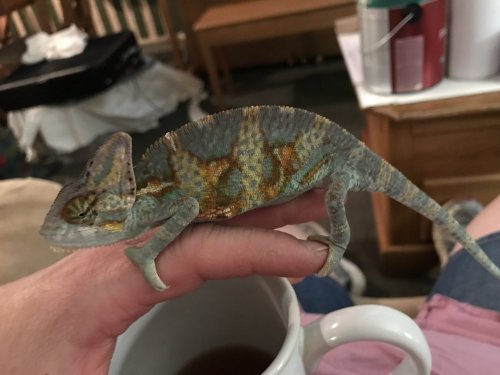
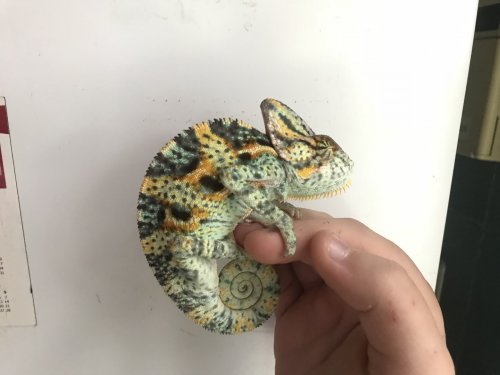
If you get another veiled it will also eat leaves from the plants and some greens, veggies and a bit of fruit if presented to it properly. It's best to get a male chameleon when you're a newbie too. That way you don't have to deal with reproductive issues
If you have any other questions...just ask.I've been keeping/breeding/hatching chameleons and other reptiles for over 30 years and a number of other people on here have kept them for many years too. There are also some vets who post here.
I hope Eddie will have better luck with the next one! Welcome to the forum!