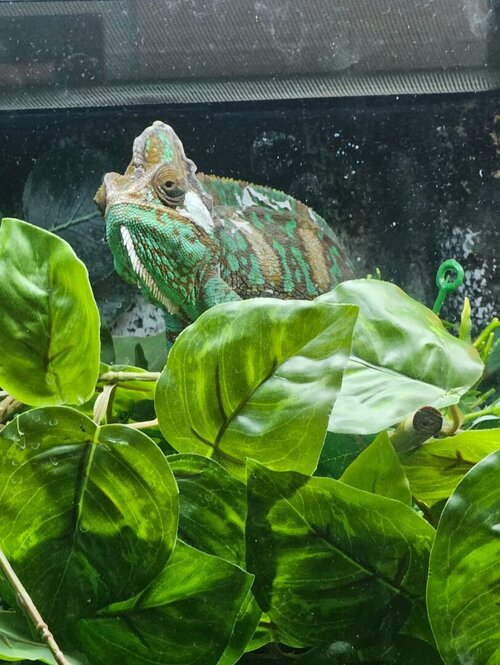
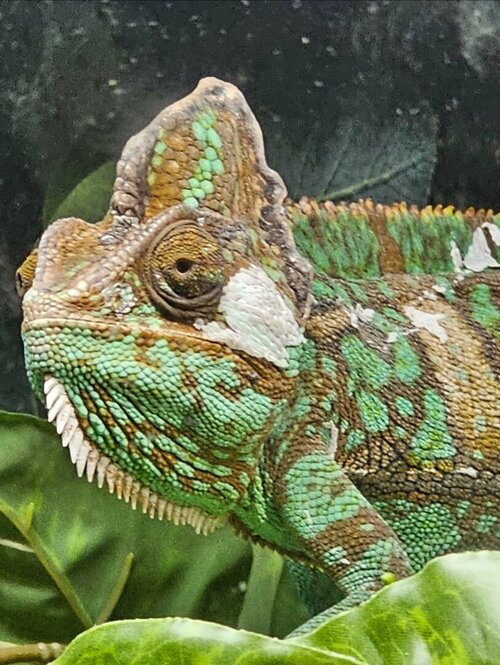
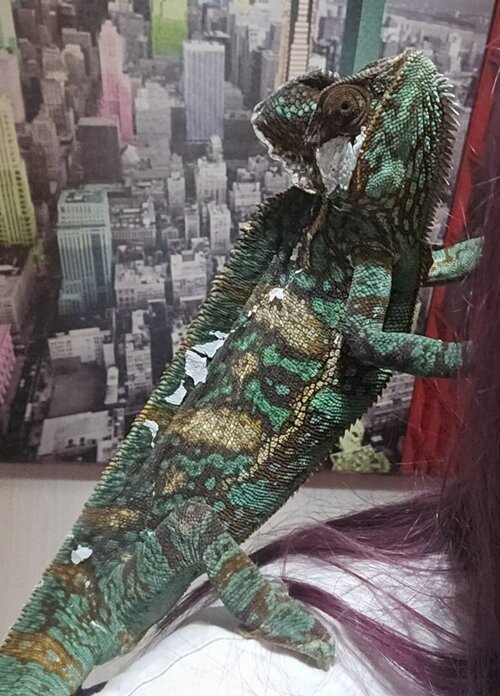
Your Chameleon - yemen, male, 3years old. He has been in my care for 2 years
• Handling - he hates being handled but came out for the first time pretty much since I got him today
Pretty standard for veileds. It probably won’t change his dislike of being handled or attitude much, but building and maintains trust with him is always a good thing. https://www.chameleonforums.com/blogs/building-trust-with-your-chameleon.2396/
• Feeding - large locuse around 7-10 every other day.
That seems like a lot of feeders and I’d expect him to be obese, but he isn’t. He looks a good healthy size to me. I feed them bug food
The gels, powders or what? that I get from the pet shop and lettuce
Most lettuce lacks decent nutrition and is mainly just hydrating. Attaching feeder and gutloading graphics. Variety of both is key.
• Supplements - arcadia dietary supplements, one without d3
Is this a calcium? on every feeding then one with d3
Is this too a calcium? 2 times per month
What about multivitamins?
• Watering - I hand spray home everyday 2 per day,
For how long each time? Should be for about 2 minutes each time and right before lights go on and then off. I do see him drink some of it
You are either fortunate (most are secretive drinkers) or he needs more hydration opportunities. I would say to add a dripper for about 15-20 minutes per day. Easiest way to do this is poke a small hole in the bottom of a plastic (disposable type) cup and sit it on top of the enclosure.
• Fecal Description - they are the same as they have been for the past 2 years he has never been tested for parasites
It’s never a bad idea to get a fecal done. Usually a vet visit is required.
• History - he is a rescue, before I got him he was in a small 45×45×45cm cage and suffered a very severe burn to the top of his head, by the time I got him there was nothing I could to to help that and the burnt part fell off but the open wound got better very well
Poor guy!
Cage Info:
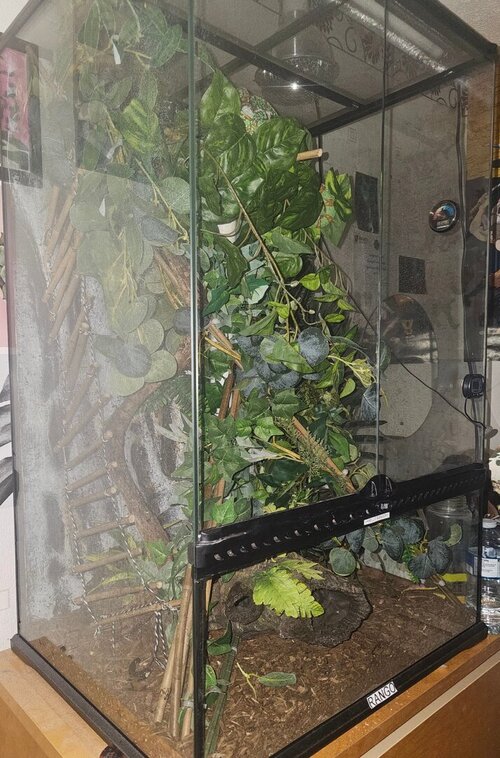
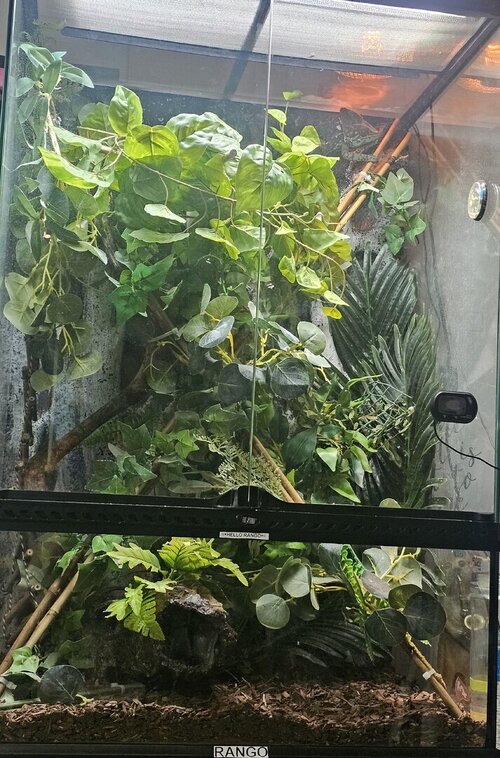
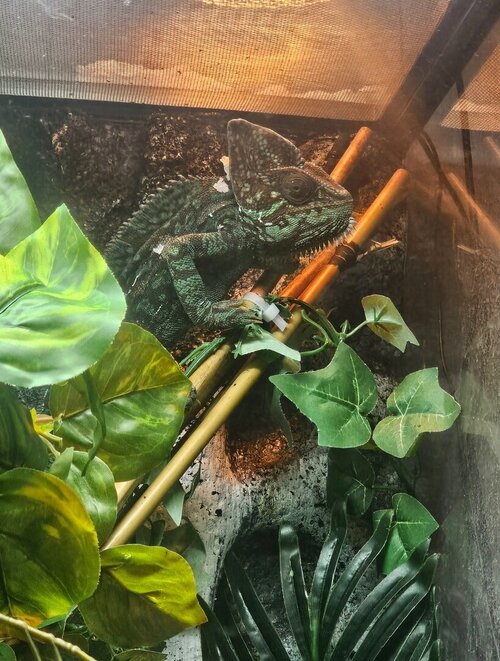
• Cage Type - glass cage with mesh top, I believe it's 45×60×90 cm
This is a bit too small. The standard minimum is 60x60x120 cm. Even though glass enclosures seem to be the preferred in the UK, I suggest getting an all screen one. It can very easily modified as needed with something as simple as a shower curtain to cover the back and sides. The ventilation is much better and greatly reduces risks of respiratory infections. It isn’t just the heat and high humidity that causes them, but poor or impaired ventilation can also add greatly to the risk.
• Lighting - I do not know the exact brand of lighting off the top of my head but he has a heat lamp and a 10%(i think its 10%) uvb bulb
10.0 is much too strong. You want either a ReptiSun 5.0 or (my preferred choice) Arcadia 6%. Have you ever changed your uvb bulb? They need to be changed yearly. If you have and it’s not yet time to replace, to compensate for the too strong bulb, you can raise the light about 7-8 cm from where it currently is. You want the distance between the 10.0 and basking area to be about 28 cm. Once you get the 5.0 or 6%, then the distance should be about 21-22 cm. *avoid knock off brands! They are not reliable in the amount of uvb they put out. is lights are on between 7:30 am and 7:30 pm
12 hours is perfect
• Temperature - his basking temperature is always about 30⁰c.
Perfect
• Humidity - his humidity levels are about 60%
Too high. This needs to be brought down to between 30-50%. Until you are able to upgrade him and/or get a screened enclosure, you should at the least add a small fan to the top to draw the air out (not blow in) to better promote air circulation.
• Plants - all his plants are artificial
Afraid I’m going to tell you to replace them all with safe live ones. Pothos (aka devil’s ivy) is perhaps the best plant for chameleons. Very easy to grow and propagate more, no special light needed and safe when nibbled. If you place one on the enclosure floor and train it to grow upwards, the vine and leaves will grow bigger. This is a great source to help you. https://chameleonacademy.com/plants/ The problem with artificial plants and veileds is veileds do like to nibble their plants. It takes only one nibble to cause a potentially fatal bowel obstruction. Also, being able to safely nibble and enjoy live plants adds enrichment to their lives, is more aesthetically pleasing to us and will also help clean the air. You can start simple with one nice bushy pothos and take some clippings to start some more. Tradescantia Zebrina is another great plant but not as sturdy for being walked upon.
,
• Placement - no one is in the area where his cage is between 8am-4pm after that I am in the room but normally not close to him. The top of his cage is about 45 ish cm from the ceiling.
All sounds good. Any other animals in the room/home?
• Location - the uk- Britain
I notice you have a soil substrate and need to ask about it. It looks like a rather thin layer and I don’t see any drainage layer or other indications that it’s a proper bioactive set up. I’m guessing it’s there not just to absorb excess water from misting, but for poo collection and look nicer. There’s a few problems with this. As it stays wet from misting, it is going to keep the humidity too high. This can also create growth of mold and bacteria which can make both your guy and yourself sick. As you seem to put the feeders loose in the enclosure, they will be walking on the substrate and carry on their feet the poo and whatever mold, bacteria or anything else growing there. Then your guy eats them. Not good. You can either remove all substrate and keep the floor bare, making sure to towel up excess water from misting promptly. Or, you can remove and trash all that is currently there and start fresh with a true and proper bioactive arrangement. https://www.chameleonforums.com/blogs/intro-to-bio-activity.2429/ The drainage layer and way to remove excess water is essential. I would also advise using a feeding station. Not only will it help keep the feeders contained, but your guy will always know where to find his food. While hunting for it is a great form of enrichment, I would do that with specific feeders, like placing some silkworms on branches for him to find or letting some black soldier fly larvae pupate into flying treats.
I can’t say that any of your husbandry might be responsible for the night hissing or that it isn’t. The things that I see could maybe contribute to it would be the humidity level and possibility that your substrate is growing some molds or other yuckies that is making him ill.
View attachment 363552View attachment 363553