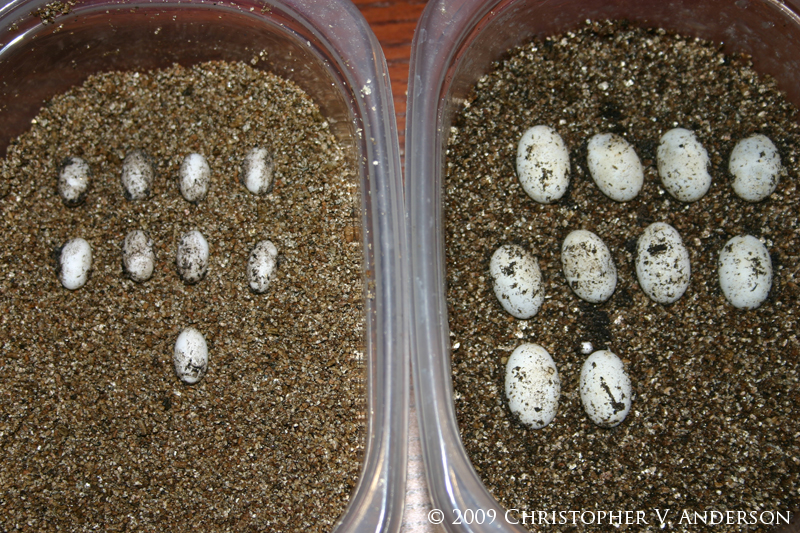
I no longer use vermiculite for incubation media for two reasons, one being that it tends to hold moisture a litte too well for my liking, many instances of egg moulding and of over absorbtion of moisture by the eggs for myliking, though experimentation with it, using a course perlite layer on top yeilded better results.
The second issue with it was post hatch, having small dragons, and pythons become covered with it prior to discovery and in one instance personally having a hatchling asphixiate after filling its mouth/throat with it.
I prefer sphagum moss, which seems ideal, not only for its mould inhibiting properties, but lack of compaction and even moisture distribution below the eggs. It also serves well
to sheild eggs from moisture droples from the box lid (used as a thin layer ontop of eggs)
seems to absorb moistre more evenly, preventing wet spots.
(think of the effect you get when you dip paper towel in a spill and the moisture spreads through the paper, the same seems true of sphagum moss, all drier moss will absorb, rather than just a spot of dampness.)
I have never lost a fertile egg using sphagum moss, no mould, and no issues with moisture content, you dont have to weigh it when preparing eggs boxes, Aka 1:1 like vrmiculite, simply soak it and squeeze dry till it forms in your hand, and thatsabout perfect, no need to make adjustments during incubation, provided you seal the containers. (lids can be removed breifly once a week or so for oxygen exchange and replaced)
Intresting photos chris, Ive noticed a few species egg growth is similarly impressive, some dragons, legless lizards, and colubrids eggs begin quite small (large in number)
and increase size 200% or more, in much shorter incubation periods too. I do note these
lizard species, and ofcourse the colubrids(tree hollows), all lay egg chambers in loose debris and/or soft soil, leaf litter or loosly dug sand burrows, So I presume
a good gas exchange rate and A need for room for the clutch to expand.
Something noteable however, is that all the above are warm climate species.
cheers