Brainstorming for enclosure stand.

Hello everyone! My name is Ricardo.

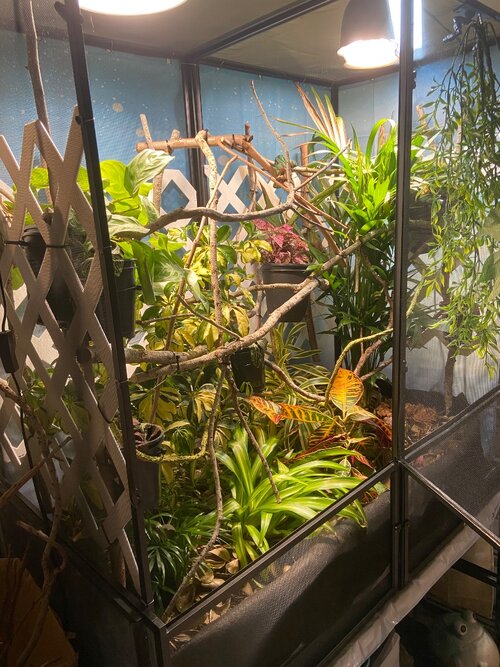
My panther chameleon, Red, recently passed away (photo attached). He was with me for several years, and I learned a tremendous amount from him. I’m not looking to replace him, and it’ll be a while before I get another chameleon. But I’d like to use that time to build the enclosure I always wished I could have built for him, so that when I am ready again, everything will already be finished.

One thing I always wanted to do for Red was build him a proper bioactive enclosure, but at the time I was just getting my career started and never had the opportunity. Now that I’m in a better position, I want to build something I’ve been thinking about for years.

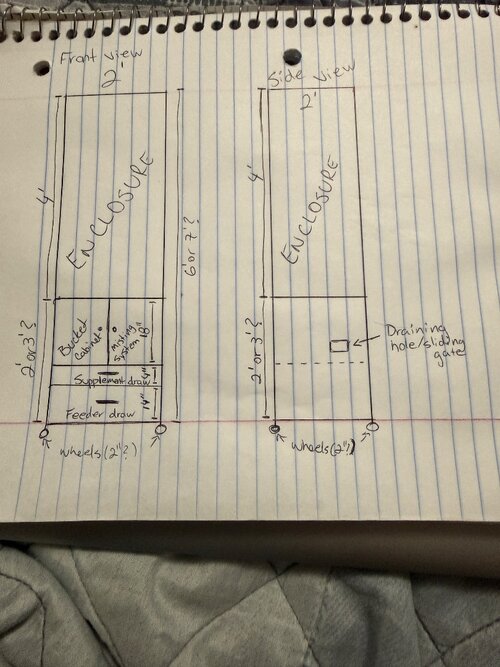
I’m a welder by trade, so instead of buying a stand, I’d like to build a custom one for a 2’ × 2’ × 4’ enclosure.

My goals:
  • Bioactive enclosure
  • Hidden drainage system
  • Hidden MistKing reservoir
  • Furniture-style cabinet
  • Easy maintenance
  • Hidden electrical management
  • Dedicated storage for feeders and supplements
  • Removable enclosure that sits on a 1” steel angle frame so it can simply lift off the stand if needed.
I’ve attached my first rough sketches. They’re definitely not final, but they should give an idea of what I’m trying to accomplish.

The biggest thing I need help with… I’ve never built a bioactive enclosure before, so drainage is the part I’m least familiar with.

I’d love to see pictures of:
  • your drainage layer
  • drain pan
  • bulkhead fittings
  • plumbing underneath the enclosure
  • bucket or drain reservoir
  • anything you wish you had done differently

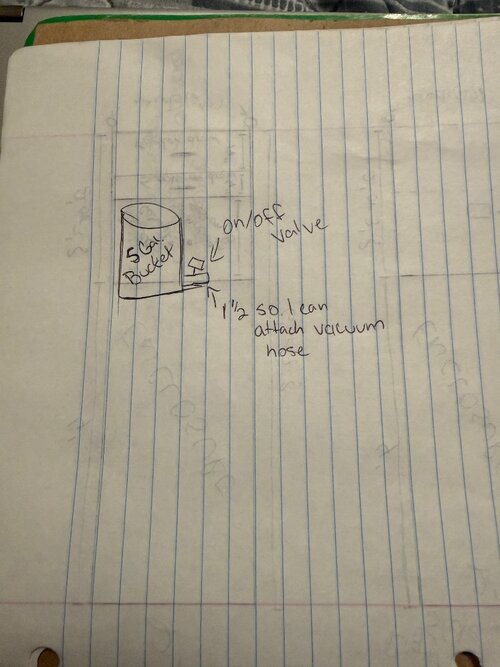
I’m also planning to have a sealed 5-gallon bucket hidden inside the cabinet that receives the drainage. My idea is to add a valve at the bottom so I can connect a shop vac hose and empty the bucket without removing it from the cabinet.

Current cabinet ideas
  • Steel frame
  • Wood or metal drawer fronts (haven’t decided yet)
  • Hidden MistKing reservoir
  • Supplement drawer
  • Pull-out feeder habitat (likely crickets)
  • Ventilated cabinet
  • Hidden electrical outlet/power management
  • Bioactive enclosure sitting on a removable steel support frame.
This is still very much in the brainstorming stage, so if you see something you’d change, or if you’ve built something similar, I’d really appreciate your feedback.

Thanks in advance!
 

Attachments

  • IMG_8735.jpeg
    IMG_8735.jpeg
    318.2 KB · Views: 1
  • IMG_4368.jpeg
    IMG_4368.jpeg
    306.1 KB · Views: 1
  • IMG_4369.jpeg
    IMG_4369.jpeg
    230.6 KB · Views: 1
Hi. Sorry that you lost your Red. He was stunning! May he be enjoying the bounty of the hereafter. 💗
I have fully bioactive enclosures, but use root pouches to contain everything on drainage trays (ReptiBreeze), so can’t be of too much help there. However, I can link you to some products that may help inspire you. This is one. https://dragonstrand.com/product/2x2-bio-active-cabinet/ Sadly, I don’t believe it shows how the inside of the cabinet is done. Another is https://tamura-designs.com/
If you are building everything from step 1, I do encourage you to go bigger than the standard 2x2x4’ size. I have all of my chams in their own double wide (4’ wide) and they use all of the space…even my girls do. So, go as wide as you can. Your chameleon will most definitely appreciate and use all of the space given. :)
IMG_5883.jpeg
 
Hi. Sorry that you lost your Red. He was stunning! May he be enjoying the bounty of the hereafter. 💗
I have fully bioactive enclosures, but use root pouches to contain everything on drainage trays (ReptiBreeze), so can’t be of too much help there. However, I can link you to some products that may help inspire you. This is one. https://dragonstrand.com/product/2x2-bio-active-cabinet/ Sadly, I don’t believe it shows how the inside of the cabinet is done. Another is https://tamura-designs.com/
If you are building everything from step 1, I do encourage you to go bigger than the standard 2x2x4’ size. I have all of my chams in their own double wide (4’ wide) and they use all of the space…even my girls do. So, go as wide as you can. Your chameleon will most definitely appreciate and use all of the space given. :)
View attachment 369665
I like the idea of the two cages together. I actually had already seen a few people do it, but unfortunately my current house doesn’t have enough space for that. I am planning on buying a home that will have more space, but that’s probably a few years in the future. Which I also don’t know when I would get another chameleon, it may be a few years as well or not. Kinda basing the sketches on my current home though. Figure I’ll sketch it out before I forget the idea and ask for feedback to improve it. Thanks for the input and the references!
 
I’ve been doing bio active for years. Really it can be as complicated as you want or as simple as you want. Bag of soil from Home Depot can be bio active, or an enclosure with a drainage layer, dozens of plants, layers of soil and leaf litter can be bio active. The idea is to make it fit your needs. So with that a layer of leaf litter is helpful because it breaks down into nutrition for your plants and clean up crew, plus offers cover for your isopods/springtails/etc. The *real* clean up crew is mostly the microscopic beneficial bacteria. That is what’s actually doing the work of crowding out harmful pathogens and breaking down waste. This will colonize in most substrate medias at some point (like I said the bag of soil). The larger clean up crew(small fauna) just helps with the initial breakdown of large waste like stool, but is not even entirely necessary though I’d still recommend to have springtails/isopods/etc for a more complete ecosystem and efficient breakdown. I also like lawn shrimp for deep substrate penetration too, kind of like worms without the soil compaction issues. They’ve been doing my blue land crab’s enclosure well. With time you’ll see leaf litter get chewed through quickly and poop will disappear within hours.

I saw you ask about the drainage layer so that’s also only necessary because of how much we water, so you could either have a closed system with a small fountain pump hidden(to pump out water when necessary) or similar access area to drain water as it fills up. Can be a few inches or more, the point is to just keep it separate from the soil with landscape cloth or screening so the water doesn’t wick up and swamp the soil. This causes bacteria to go anaerobic giving that sewage like smell you’ll experience if you ever walk through a swampy area of mud. Most plants don’t thrive in these conditions and overall is not what you want. The closed system is nice because plant roots can still grow down into this area and benefit like a hydroponic system. A simpler way which also works well is just drill some holes in the bottom without a drainage layer and let the water drain out like you normally would, then dump the water(i used to pump it into my backyard into the garden).

Anyway, im sure whatever you choose will turn out nice, good luck!
 
Back
Top Bottom