IME (I've been through many where I live—not the best infrastructure), short-term outages aren't much at all—even in the Great Lakes/Northeast US.
One thing you can do is look up climatological data for where your chameleon is from, e.g.
https://www.google.com/search?client=firefox-b-1-d&q=climatological+data+ambilobe+madagascar
(or whatever locale you have). Keep in mind that the data is usually in
averages; actual spikes can go higher or lower, and chameleons still survive. They
can be hardier than we might think.

This will at least give you a better handle on what conditions may be of
actual concern.
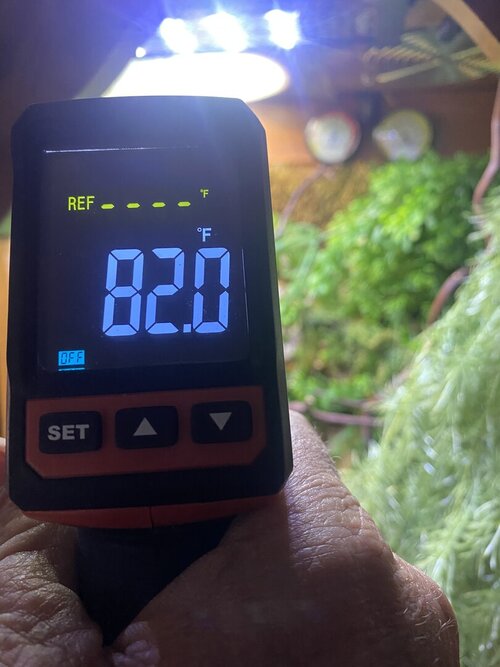
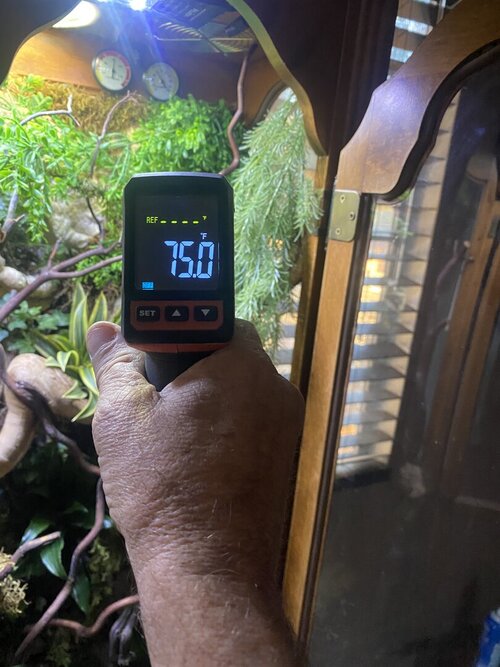
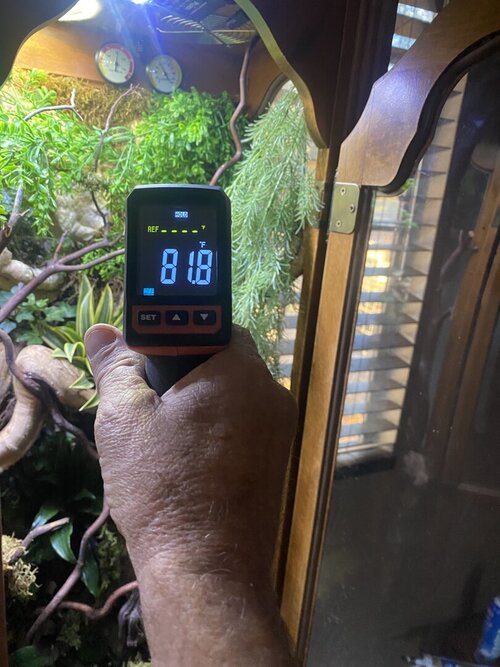
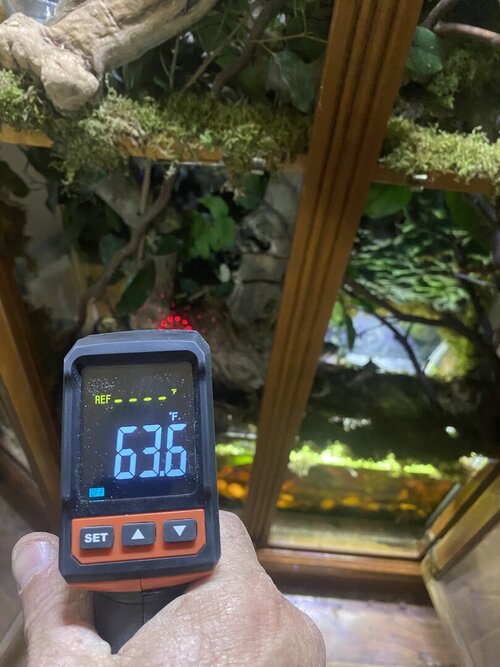
Temp guns definitely have their uses, but they have some caveats as well. (Sorry, IDK how much you've looked into them, but for others as well...) They'll measure surface temperature, but not necessarily the air temp
around that surface. Depending on the model, they (the more affordable models) don't take into account
emissivity (more expensive models have settings for emissivity).
To get a more accurate picture of what's going on in our enclosures, a number (2-3+) of digital hygrometer/thermometers with probes can help.
To give an idea of how both can work together, I have a digital probe at my cham's basking site, and keep target temps at 80-ishF. However, while he's actually basking there, the temp reading off of his skin can be mid-80s or more. This is partly due to their ability to darken their color and absorb more heat.