Ok, so she may not have yet reached egg production and laying age, which is very good. It gives time to get everything as perfect as possible so that when she does reach that, she is less likely to have laying problems. However, that still leaves the question of what is wrong for her to be sitting at the bottom of the enclosure. In nature and by their nature, chameleons don’t often like to come down to the ground as there’s more danger for them, so this is a sign that she isn’t feeling well at all. Usually the only different movements they make while shedding are rubbing against things and stretching to help loosen the shed skin. I’m inclined to think that she isn’t feeling well because she’s been lacking proper uvb light and maybe even the bee pollen, but really the cause could be anything. Yes, I did say bee pollen. Although anecdotal, it has caused edema and other issues when given straight to chameleons and specifically veileds. Instead, add the bee pollen to what you are giving your feeder insects who will them become healthier and more nutritious. Until your uvb light arrives, try to take her outside in some sunshine and fresh air for a short time. Maybe sit her on a small plant that you can then take outside. If you have an area of dappled sunlight, you can sit there with her for some time. If only direct sunlight, I’d limit the time to about 15 minutes so that she won’t overheat. Also, never ever leave her alone outside. They are super fast when they want to be and predators can be even faster. See if that helps her feel a bit better. I do always recommend having wellness vet visits and fecals done. Parasites are more common than we know and even chameleons from the very best breeders can get them.
I didn’t give you the whole husbandry review, so I do want you to review your care by the web site link I gave you. We can do a full review if you like…just say so. I think at times people get scared away by having so many questions thrown at them right away.
Back to reproduction. The whole egg laying thing greatly shortens the lives of our ladies. Adding to that is the more they eat, the more eggs they produce and the more eggs there are, the greater the risk for egg binding and other problems. There are ways to try and reduce egg production though and for most, it works well. First, lower basking temp to 80 and no higher. This will help to slow metabolism just a bit. Then we limit how much we feed our girls. Yours is at the age where this is hard to do. We want to make sure she gets enough nutrition to fully grow, but still need to be mindful of egg production. I’m going to say continue to feed her 7-8 feeders daily and maybe in about a month, cut back to 5-6. If she starts to develop some colors, switch her to every other day feeding. The goal is for once she is fully grown to feed her 3-4 feeders, 3 days a week. Usually I think it’s best to start this after she’s laid her first clutch or has reached about 7-8 months old. You also need to start getting a lay bin ready. It saves so much stress for both you and your girl to just make a lay bin and keep it as a permanent part of her enclosure. I use big bins (my girls showed a preference) with some tiny holes drilled in the bottom for drainage and washed play sand of about 6” deep. I try to give at least a couple of sturdy ways in/out. Some chams will have their special poo spots. If you look and find your girls, make sure to place the bin away from it.
I should have warned you that I talk a lot. Lol

I’ll shut up for now.


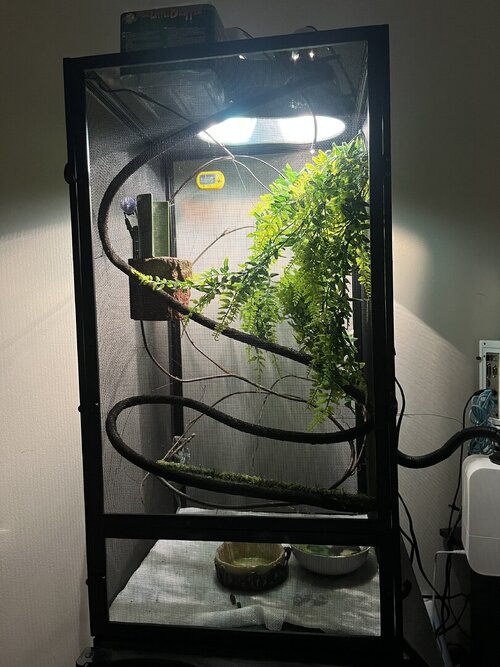


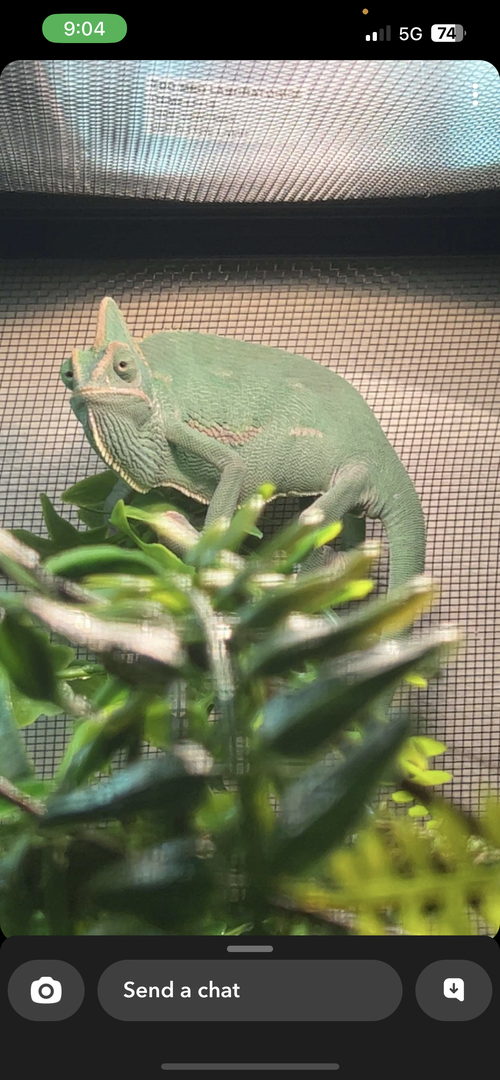
 Can you post some clear pics of her please. How much has she been eating and how often? What supplements have you been using and what is the schedule? How long have you had her/how long has she been in this type of set up (mainly with the coil uvb)?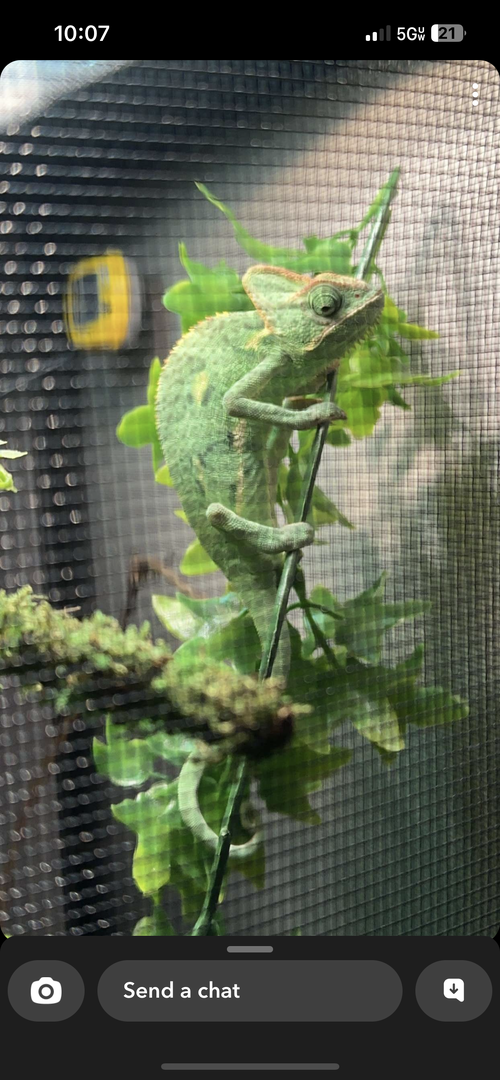
 .
. i’m learning about a slow system where she learns my hand means food, but also not to rush anything. i’m hoping it’s just the uv issue.
  . she’s ALWAYS ready to eat. i mean like, i’ve never seen a chameleon practically RUN to the food
 they are grumpy by nature so don’t expect her to be cuddly


