First off, sorry for the influx of questions and info, I know it can be very overwhelming, so sorry in advance!
Chameleon Info:
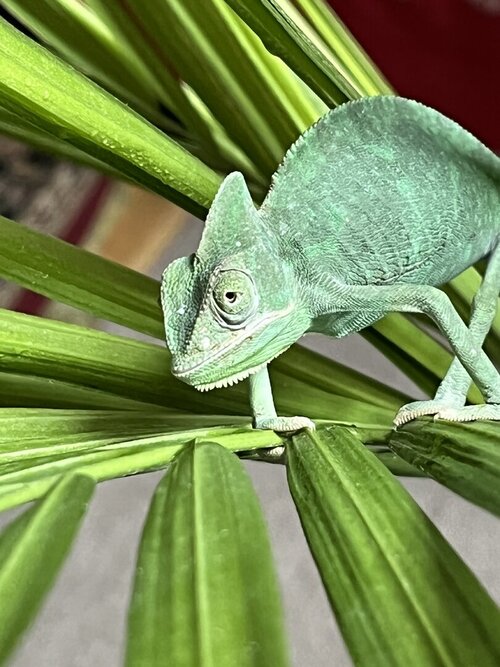
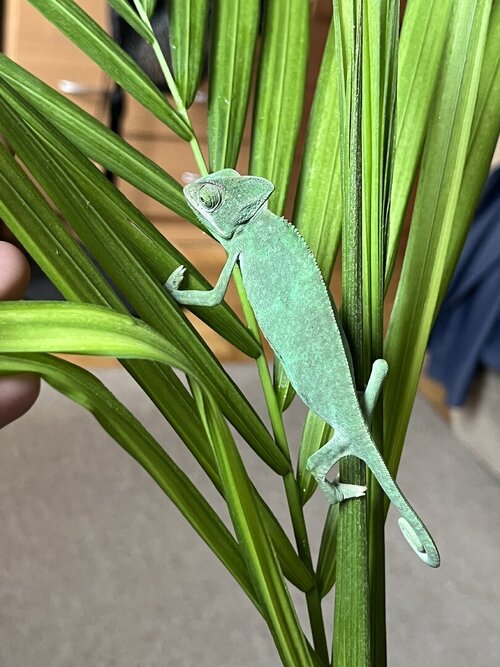
-Veiled Chameleon, about less then 6 months old Does it have tarsal spurs? If it does, then it is male. Males and females have different care requirements, so knowing the gender is important.
-Handling, once or twice a day to offer water How are you giving it water?
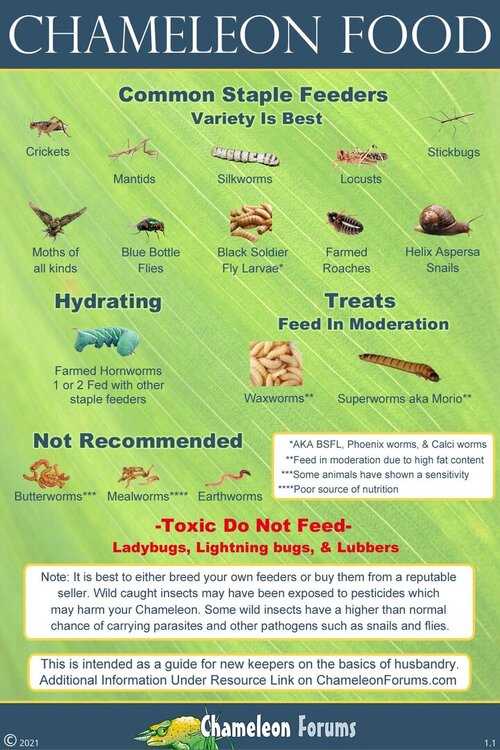
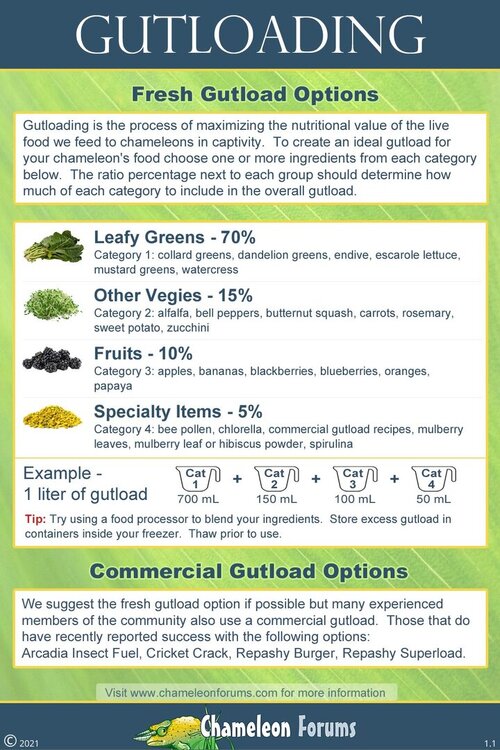
-Feeding, offered mealworms, has not eaten anything since getting it Mealworms are not good staples, just as occasional treats. Roaches, grasshoppers, and crickets carry the most gutload, but silkworms are super nutritional and provide extra moisture, too. Moths and flies are good, as well, along with black soldier fly larvae. The more variety, the better! Right now it's just important to get it to eat anything, especially something with nutrition. What do you gutload with? As with feeders, the more variety, the better! I've attached a great feeder chart below, along with a great gutload chart! What are you planning on supplementing with, along with what supplementation schedule?
-Watering, misting about 3 times a day, with a bowl of water left in enclosure How long do you mist for each time? Water bowls aren't good, as they're just breeding grounds for bacteria. Drippers and cool-mist foggers (foggers only at night!) are great secondary water sources! For a fogger, you need enough airflow (so not in its current tank; what are you planning on upgrading to?) and temps to be at or lower than 65°F, though, otherwise it gets dangerous.
-Fecal, dark green to black with white end
-History, kept with another chameleon at the pet store Do have pics of the green poop? It'll be best to get at least one fecal done (preferably two or three to make sure no parasites are missed), x-rays, and a general exam from an exotics vet with reputable chameleon experience for both your chams, separately, to make sure they're healthy. Not all vets are equal, as some have little to no experience with chameleons and some like to give meds and vitamins without figuring out if they're needed first, so make sure if they want to give any medicines, vitamins, injections, they give you a cause first that they can prove and show you
Cage Info(will be fixed to a proper enclosure):
-Cage type, 29gallon aquarium What are planning to upgrade to? Could you post some pics, as well?
-Lighting, basking spot lamp (not in use) What type and color of heat bulb do you have, along with the type, brand, and bulb strength of UVB?
-Temperature, 80-95F day / 65-75F night That's too hot of a basking spot. Basking spot temps do depend on gender, as well; 78-80°F for a female and 80-85°F for a male. The daytime ambient room temp should be around the low 70s, with nights being at or below 65°F. What are you using to measure temps? A digital thermometer with a probe should be used to measure basking temps at least, with the probe placed where the top of your cham's back is when it's on its basking branch. Digital thermometers and/or digital thermometer-hygrometer combos should be used throughout the enclosure to measure ambient and nighttime temps (at least 2, one near the top and basking area and the other near the bottom)
-Humidity, day 40-55% / night 80-95% What are using to measure this? Veiled humidity levels during the day shouldn't go over 50%. As long as the temps are cool enough, and there's enough airflow, those nighttime levels are perfect!
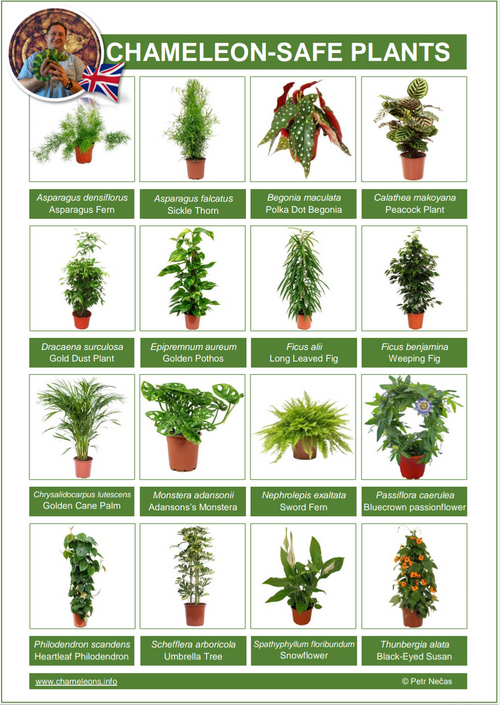
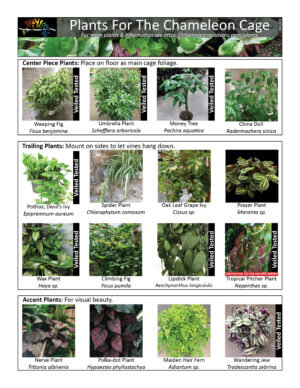
-Plants, live plants Are they veiled-tested?
-Placement, few feet away from window to receive sunlight Be careful with this, especially in a glass aquarium, as windows can cause overheating in the enclosure if left in the sun. Also, UVB does not transfer through glass, all of it gets blocked. It's better to take your cham outside to receive natural rays if the environment is good and it's not too stressful on the cham.
-Location, NYC
Current Problem- It has not eaten since I got it (5 days), it has its eyes closed majority of the time. Looks fairly skinny. Any advice on what to do or suggestions?
Here's the gutload and feeder charts, along with two plant charts to have. Let us know if you have any questions, need more clarification, want more care links, etc! We're here to help!