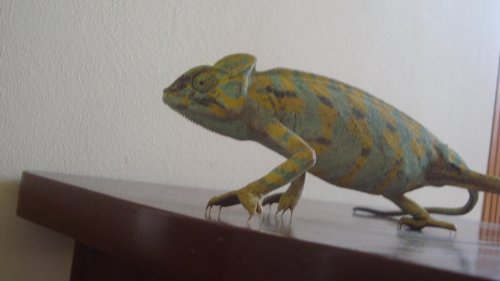
I think its a female veiled, though I've never seen a veiled with such markings on it.
To tell gender, look for a pimple looking bump on the back of the back feet, if there is a bump its male, no bump is a female.
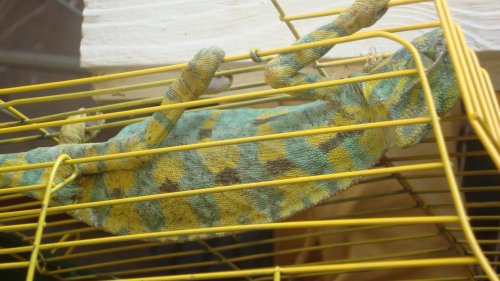
The tail looks like it either got caught in something or had a bad shed, keep an eye on it, but it may dry up and fall off, in which case you have to be on the lookout for infection.
Females require an egg laying bin as they can lay eggs even if never bred.
a bucket that is at least 12 inches deep and 12 inches wide filled with washed play sand or damp dirt is needed, and it must be damp enough to allow a tunnel to be dug without it collapsing. (thye need access to this bin 24/7)
They need UVB and a basking bulb ( you can use a regular house bulb, but not the spiral energy efficient ones).
Basking temp for her should be 82-85 deg F.
They need a regular supplement schedule.
Calcium without d3 for every feeding
Calcium with d3 twice a month
Multivitamin twice a month
The cham you have appears to be dehydrated- They need a misting at least 4-5 times per day and let the leaves get all wet, as they dont drink standing water.
No lights on at night- a temp trop down to 55 deg F is fine.
for the cage- you need a screen cage- that is at least 18-18-36 inches.
they like things that are taller than they are wide.
provide lots of foliage- as this will make her feel more comfortable, and life plants help with humidity- which helps with shedding. For a safe plant list- scroll up to the green bar, click references, then safe plants list.
For bugs to feed- LIVE ONLY.
roaches
hornworms
superworms (not alot as these have a hard exoskeleton which makes it hard to digest)
Silkworms
Crickets
Waxworms (these are very fatty, so for a treat only)
pheonix worms (aka calci worms, repti worms)
praying mantis
painted lady butterflies
mealworms
locusts (if you have access to them, NOT available in the USA)
any other questions, please feel free to ask.
and read that help blog its great.


 Hello and welcome to the forums. Well you did come to the right place. There is a lot to learn to keep chameleon happy and healthy. I'll post a link for primary care first. Please read this and then as much as possible set it up this way. Then come back and cover what you have set up and any questions. We'll be happy to help in any way possible. You are going to love it once everything settles in.
 Good luck and I love the colors.


