Welcome to the forum!
It's a great place for reliable info on chams--but there is room for everyone from total newcomer doing research about a potential purchase to the most knowledgeable chamkeepers.
Glad you're looking into why it happened, as it's important to determine the cause.
I can confidently say that virtually everyone here has made at least one mistake in their cham care, as none of us never err.
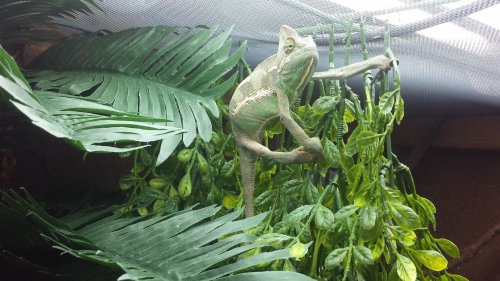
To second what SaintJimmy has said, there needs to be a physical separation
and a visual separation between the 2 chams. The constant stress of thwarting the efforts of a male who always wants to mate can also take its toll on a female cham.
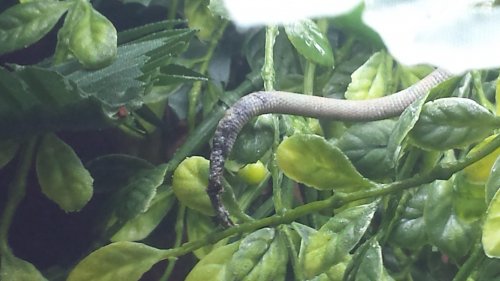
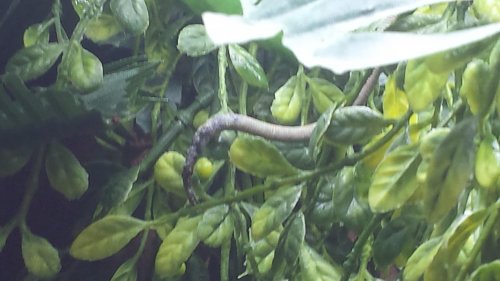
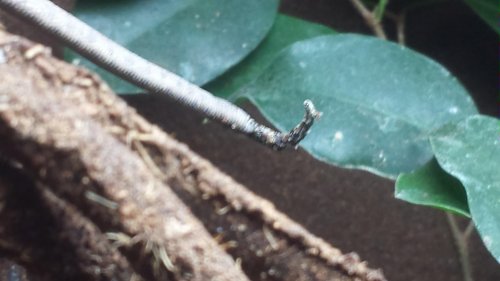
Common causes of tail tip necrosis are injury, inadequate hydration or vitamin deficiencies; often, but not always, a inadequate amounts of vitamin A.
Part of the solution is to check over all of your care to find which things need to be changed before further troubles appear and correct any vitamin deficiencies, if present.
for example, your supplement schedule is not right and the humidity is a bit too low.
Too much of one supplement can actually create a deficiency of another.
It's also important to be sure that the vitamins/minerals haven't expired and lost strength/effectiveness.
Here is a link to the Veiled care section of the forum :
https://www.chameleonforums.com/care/caresheets/veiled/
This is also where a good vet who knows how to treat chameleons comes in quite handy.
Not only can the necrotic tissue be removed before it becomes infected but a vitamin deficiency can be diagnosed and an injection of vitamin A administered (if it is the cause).
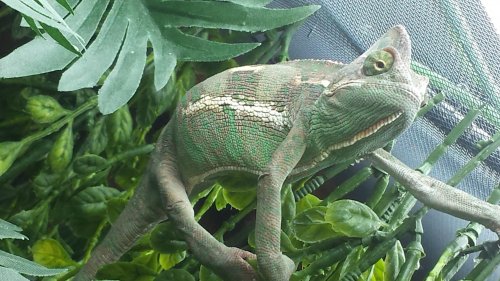
Vitamin A deficiency is also a frequent culprit in eye problems and can cause swollen lips.
To quote from here
http://www.peteducation.com/article.cfm?c=17+1796&aid=3027
There are several forms of vitamin A. Beta-carotene is a form commonly found in vegetables. Many animals can convert beta-carotene into vitamin A. Others, such as the cat, cannot, and must have what is commonly referred to as preformed vitamin A. It was originally thought that chameleons could convert beta-carotene, but recent research suggests that they too may need preformed vitamin A.
There has been considerable controversy over how much, and what type of vitamin A chameleons need. Reports of small research studies in the 1990s suggested chameleons should not be given preformed vitamin A, since it could result in excessive levels of vitamin A in the animal (hypervitaminosis A). Later research found this information to be incorrect. Many chameleons today suffer from vitamin A deficiency (hypovitaminosis A) due to the misinformation published in the early 1990s.
In addition to not enough access to water, a lack of hydration can also be caused by inadequate humidity levels.
Vitamin deficiencies can be caused by a lack of variety in the diet, feeders who are not fed a variety of nutritious foods (as in "you are what you eat") or improper dusting of foods (too often, too little, wrong type, etc.).
A wonderful section to give a thorough read is the Resources area of this forum
Here is the link to the Veiled care section there:
https://www.chameleonforums.com/care/caresheets/veiled/
There are many additional sections there about health, feeding, finding a vet, enclosures and more.
Hope your cham is on the mend quickly and I hope that this post has helped you, too.