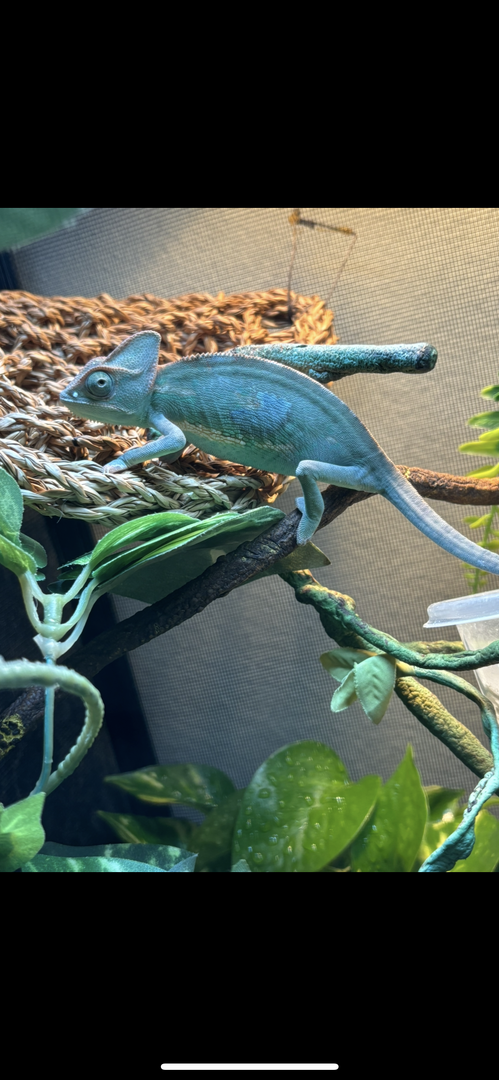
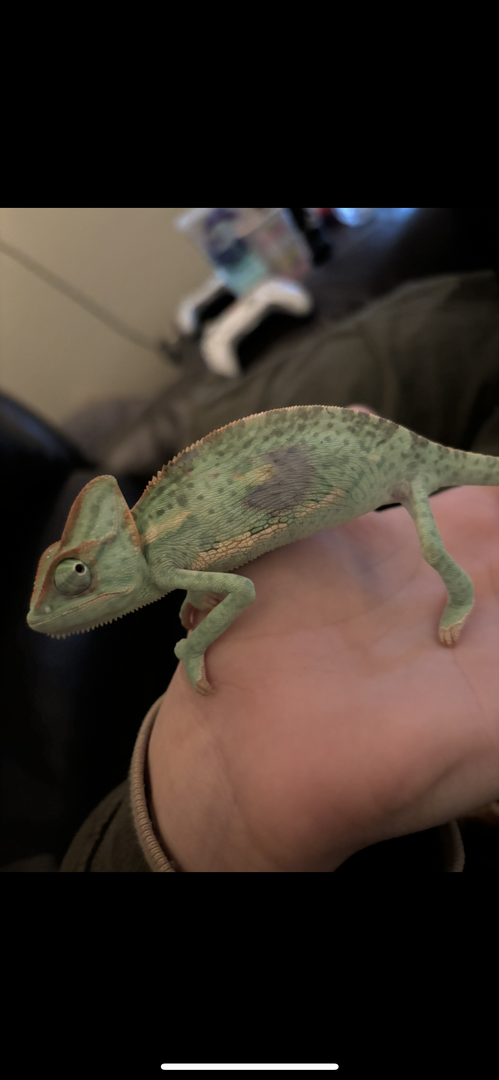
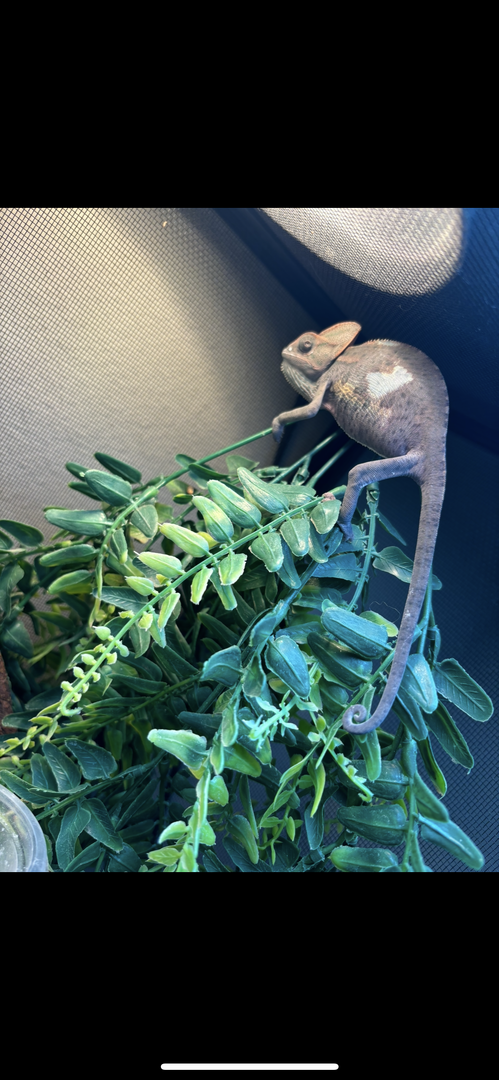
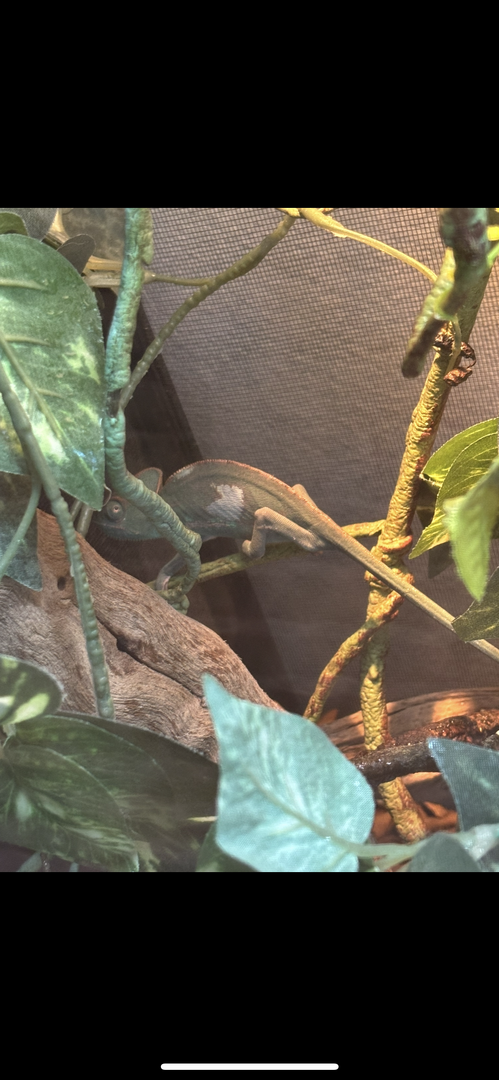
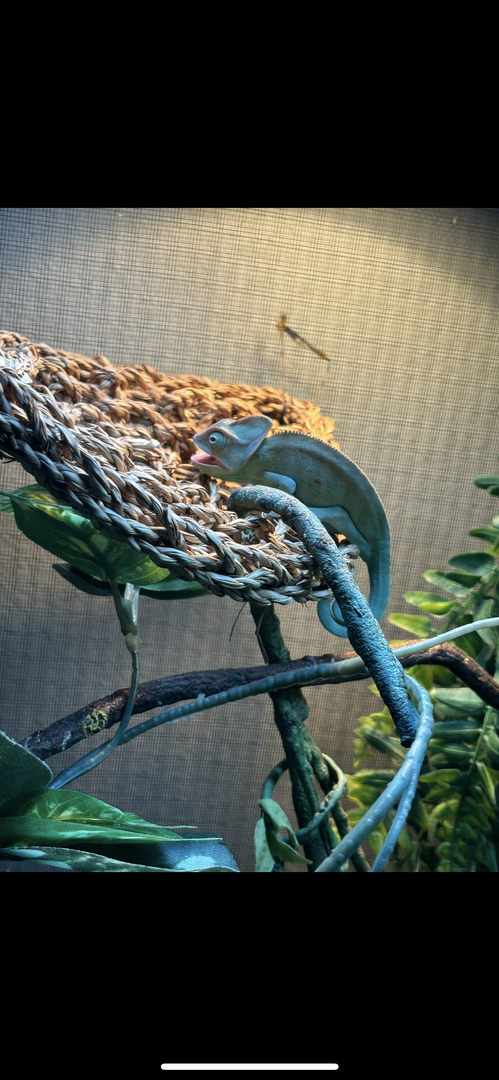
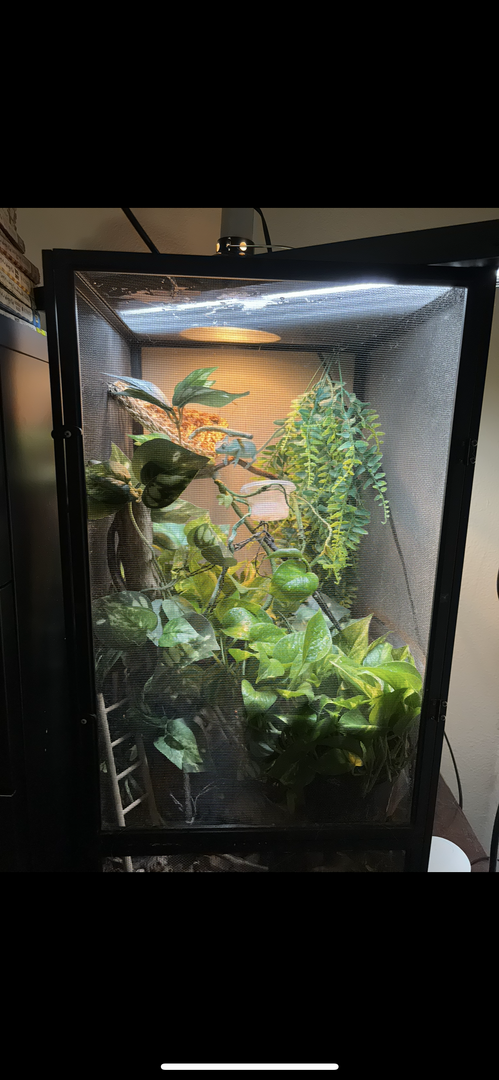
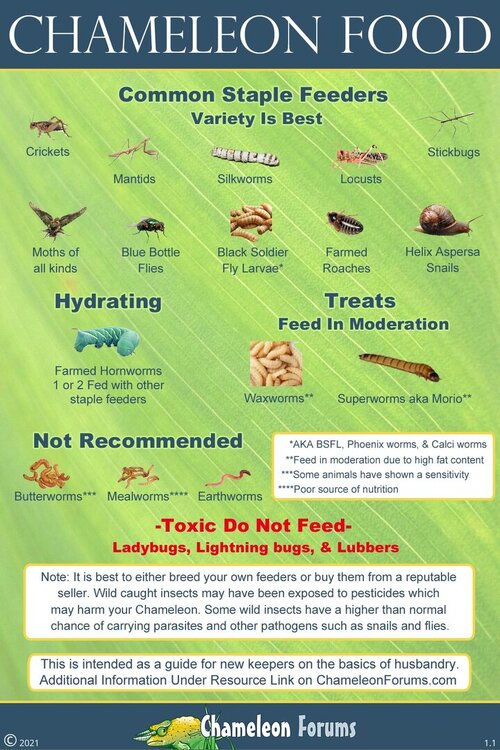
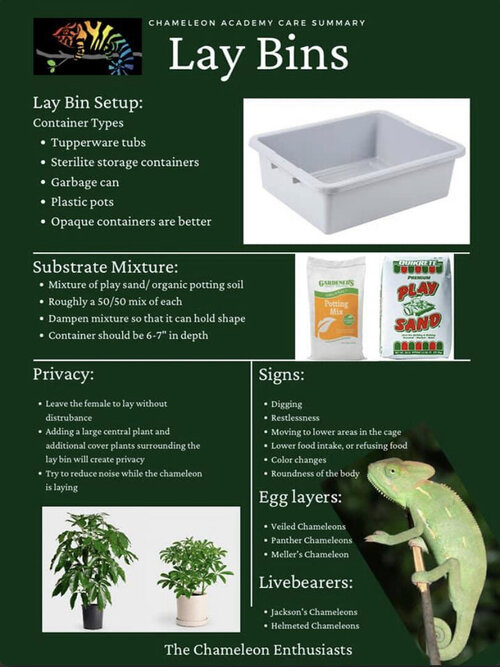
No problem, we’re here to help! Is the Biodude thermometer probed? If not, you’ll need to get a probed digital thermometer to measure her basking temp (placed where the top of her back is when she’s on her basking branch), and you want it to be 78-80*F there, as higher temps, along with overfeeding- I’ve attached a link to the recommended feeding schedules for female veileds below-, increase clutch sizes, which is riskier and more taxing for her. Temp guns aren’t good for us chameleon keepers, as they measure surface temps while we need to measure air temps. You want her basking bulb to be 9”+ away from her basking branch, too, to help prevent burns. You want her uvb bulb (replace every 6 months with Zoo Med- if you switch to an Arcadia 6% next time you need to replace her uvb bulb, they last for a year) to be 8-9” away from her basking branch for proper UVI levels (UVI level of 3 at the top of her back when on her basking branch). You can also invest in a Solarmeter 6.5 to check exact levels; it’ll also let you know when exactly to replace the uvb bulb and is the only way to know if a bulb is defective; it’s literally a lifesaver, I couldn’t recommend it enough! Another thing is that since veileds will try to eat anything, they need only live and veiled tested plants in their enclosure, no fake ones or fake vines with fake leaves (no moss or Exo Terra vines either, they’re dangerous, as well). You’ll want to wash the entire plant (underside of leaves, root ball, everything) with either regular Dawn dish soap or diluted Physan, then rinse really, really, really well, and repot into organic potting soil after. Then you’ll cover the soil with rocks too big for her to eat. You’ll also need a lay bin (12”x12” long and wide minimum, with 5-6” deep of substrate in it), too, I’ve attached both a great egg laying link and lay bin graphic below! The rope hammock and wooden dowel ladder both need to go, as they’re both dangerous, as well. Her cage could use more branches (safe woods include maple, oak, birch, manzanita , crepe myrtle, most hardwoods, any non toxic and non sap producing tree, etc.), vines, and plant cover. Last question is if her cage bottom is bare except for plant pots? I’ve also added a couple more graphics and some more helpful links below, too! Let us know if you have any questions, need clarification, whatever!
https://www.chameleonforums.com/blogs/veiled-chameleon-laying-101.2488/ (egg laying blog)
(link no longer valid) (cage set up link)
https://chameleonacademy.com/setting-up-a-chameleon-cage/ (cage set up link)
https://chameleonacademy.com/plants/ (safe plants link- pick veiled tested ones only)
https://chameleonacademy.com/chameleon-husbandry-program-getting-started-with-chameleons/ (this is the most accurate and up to date care available, so be sure to read through every module!)
https://chameleonacademy.com/veiled-chameleon-care/ (most up to date veiled care sheet, though basking temps are for an adult male only, humidity can go a little lower during the day, down to 30%, and the feeder amounts are more nuanced than that)
Post in thread 'A few questions from a new veiled chameleon owner'
https://www.chameleonforums.com/thr...ew-veiled-chameleon-owner.193901/post-1815648 (feeding schedule to stick to)
And here’s the husbandry form to fill out if you want us to go over everything (just copy and paste the form then fill it in):
Here is some recommended information to include when asking for help in the health clinic forum. By providing this information you will receive more accurate and beneficial responses. It might not be necessary to answer all these questions, but the more you provide the better. Please remember that even the most knowledgeable person can only guess at what your problem may be. Only an experienced reptile veterinarian who can directly examine your animal can give a true diagnosis of your chameleon's health.
Chameleon Info:
- Your Chameleon - The species, sex, and age of your chameleon. How long has it been in your care?
- Handling - How often do you handle your chameleon?
- Feeding - What are you feeding your cham? What amount? What is the schedule? How are you gut-loading your feeders?
- Supplements - What brand and type of calcium and vitamin products are you dusting your feeders with and what is the schedule?
- Watering - What kind of watering technique do you use? How often and how long to you mist? Do you see your chameleon drinking?
- Fecal Description - Briefly note colors and consistency from recent droppings. Has this chameleon ever been tested for parasites?
- History - Any previous information about your cham that might be useful to others when trying to help you.
Cage Info:
- Cage Type - Describe your cage (Glass, Screen, Combo?) What are the dimensions?
- Lighting - What brand, model, and types of lighting are you using? What is your daily lighting schedule?
- Temperature - What temp range have you created (cage floor to basking spot)? Lowest overnight temp? How do you measure these temps?
- Humidity - What are your humidity levels? How are you creating and maintaining these levels? What do you use to measure humidity?
- Plants - Are you using live plants? If so, what kind?
- Placement - Where is your cage located? Is it near any fans, air vents, or high traffic areas? At what height is the top of the cage relative to your room floor?
- Location - Where are you geographically located?
Current Problem - The current problem you are concerned about.
--------------
Please Note:
- The more details you provide the better and more accurate help you will receive.
- Photos can be very helpful.


 )
)