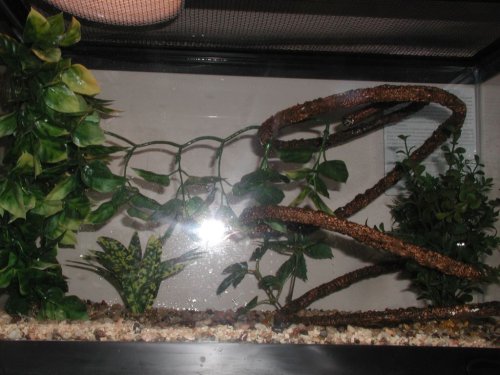
Real plants should be non-toxic and washed well (both sides of the leaves) before being added to the cage. Veileds are omnivores, so they might eat the leaves of the plants and if the insects nibble the leaves, then you don't want toxic plants to end up in your chameleon. Pothos is the main plant that I use.
I agree with what others have said concerning using no substrate and with not using a light/heat source at night. Chameleons can take temperatures well below normal room temperature...and a drop in temperature at night is thought to be good for them. I also agree that you need to provide UVB lighting for him.
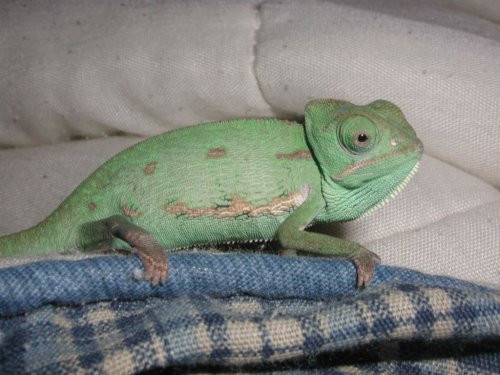
The poop/urates look good. The chameleon looks good and healthy and doesn't look dehydrated.
I gutload my crickets with a lot of greens (dandelion greens, collards, kale, endive, ROMAINE lettuce, etc.) and veggies (sweet potato, regular white potato, carrots, squash, etc.).
Because veiled chameleons will eat veggies (sweet red pepper, zucchini, squash, sweet potato, carrots, etc.) and greens (same greens as for the crickets) and some fruit (apple, pear, melon, berries, etc.) when they are about 6 months old, you can feed them some a couple of times a week.
I dust my insects with phosphorous-free calcium at most feedings. Insects have a poor ratio of cal/phos...so this helps balance it out.
I dust the insects twice a month with a vitamin powder that has its source of vitamin A from beta carotene. Beta carotene can't cause an overdose but preformed vitamin A can.
Because my chameleons don't ususally get sunlight, I dust lightly with a calcium/D3 powder twice a month. Vitamin D3 from supplements can build up in the system, but it usually can't when produced as a result of exposure to sunlight. (UVB light should not pass through glass or plastic.)
To have healthy bones, its important to have the right balance of vitamin D3, vitamin A, phos. and calcium. Proper temps. are important too because that helps the chameleon digest its food.
Concerning glass cages...I live in a cool climate and have used glass cages for my chameleons without problems. They are a little extra work to get them to work well....but they do/can work. Many Europeans use them too. If you live in a hot climate, then they, of course, shouldn't be used...and they definitely shouldn't be in an aquarium when/if put outside.
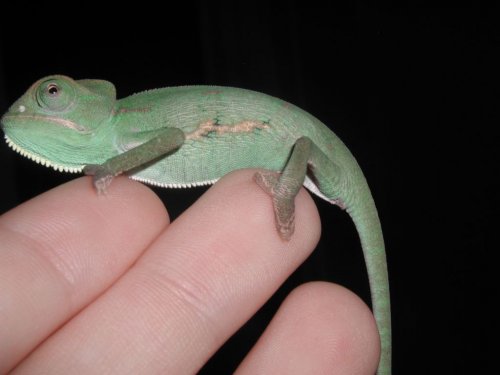
My veiled females usually live to be well over 6 years old and my males even older.
Hope I haven't overwhelmed you! If you have any questions about any of it, just ask...I'll do my best to answer!